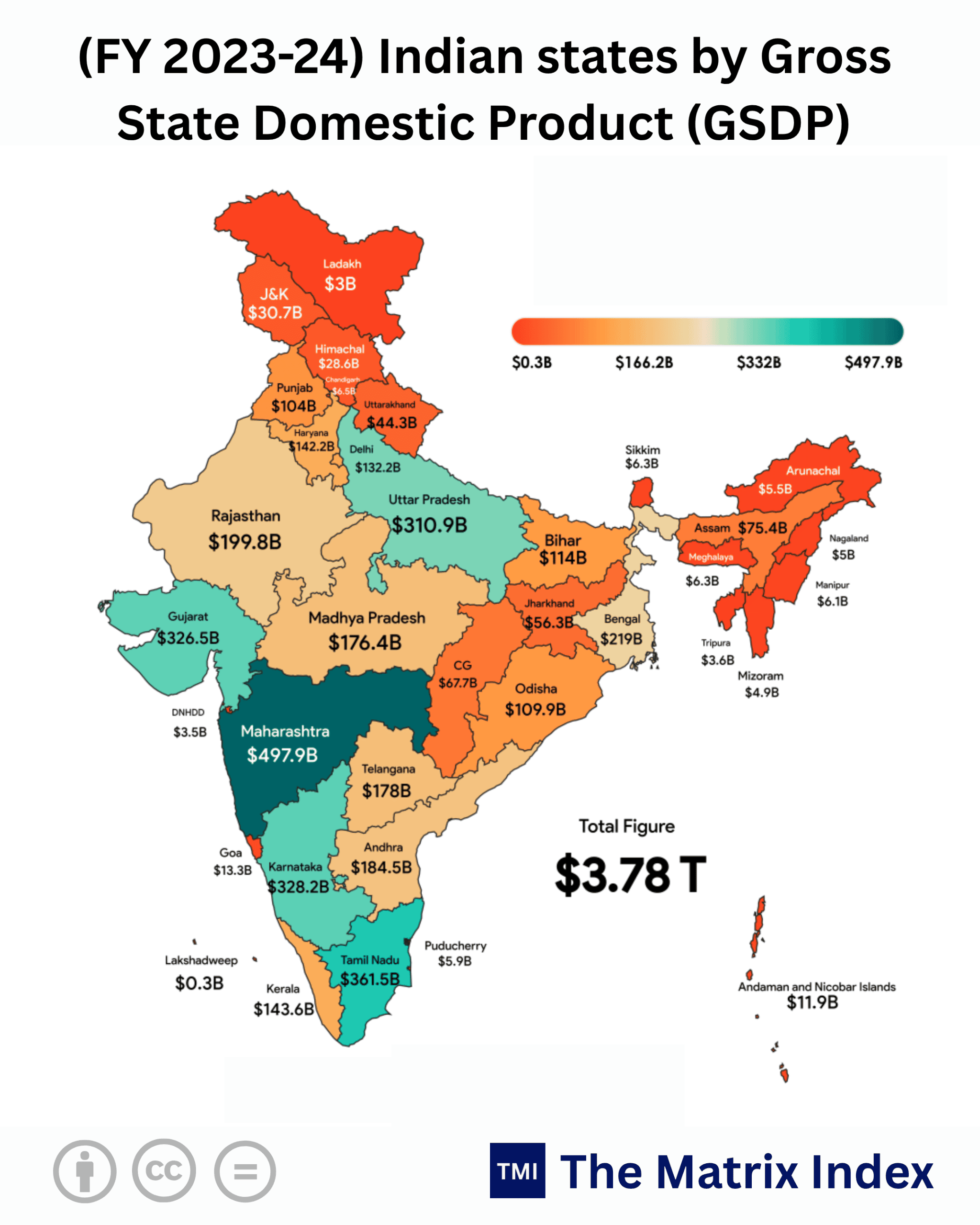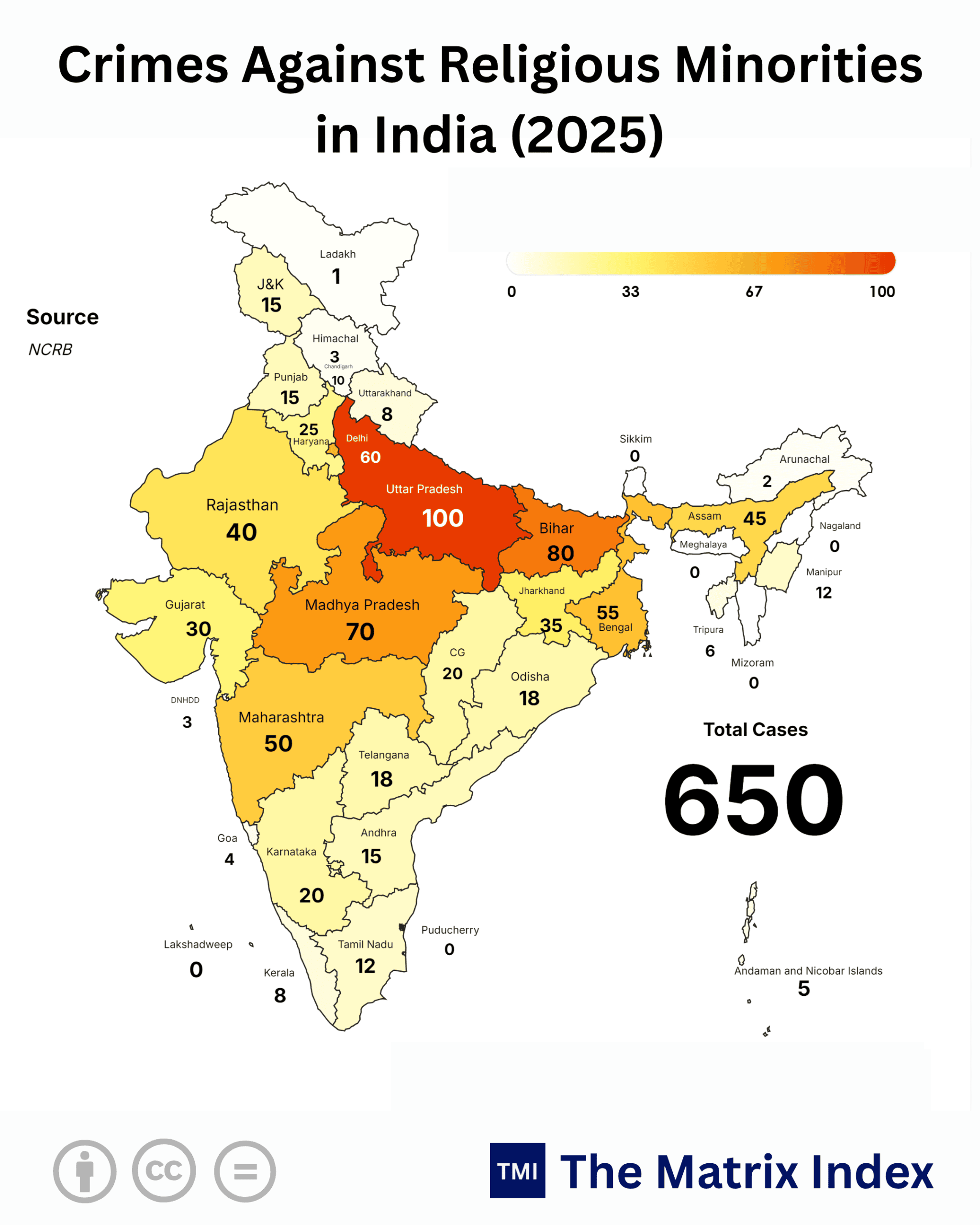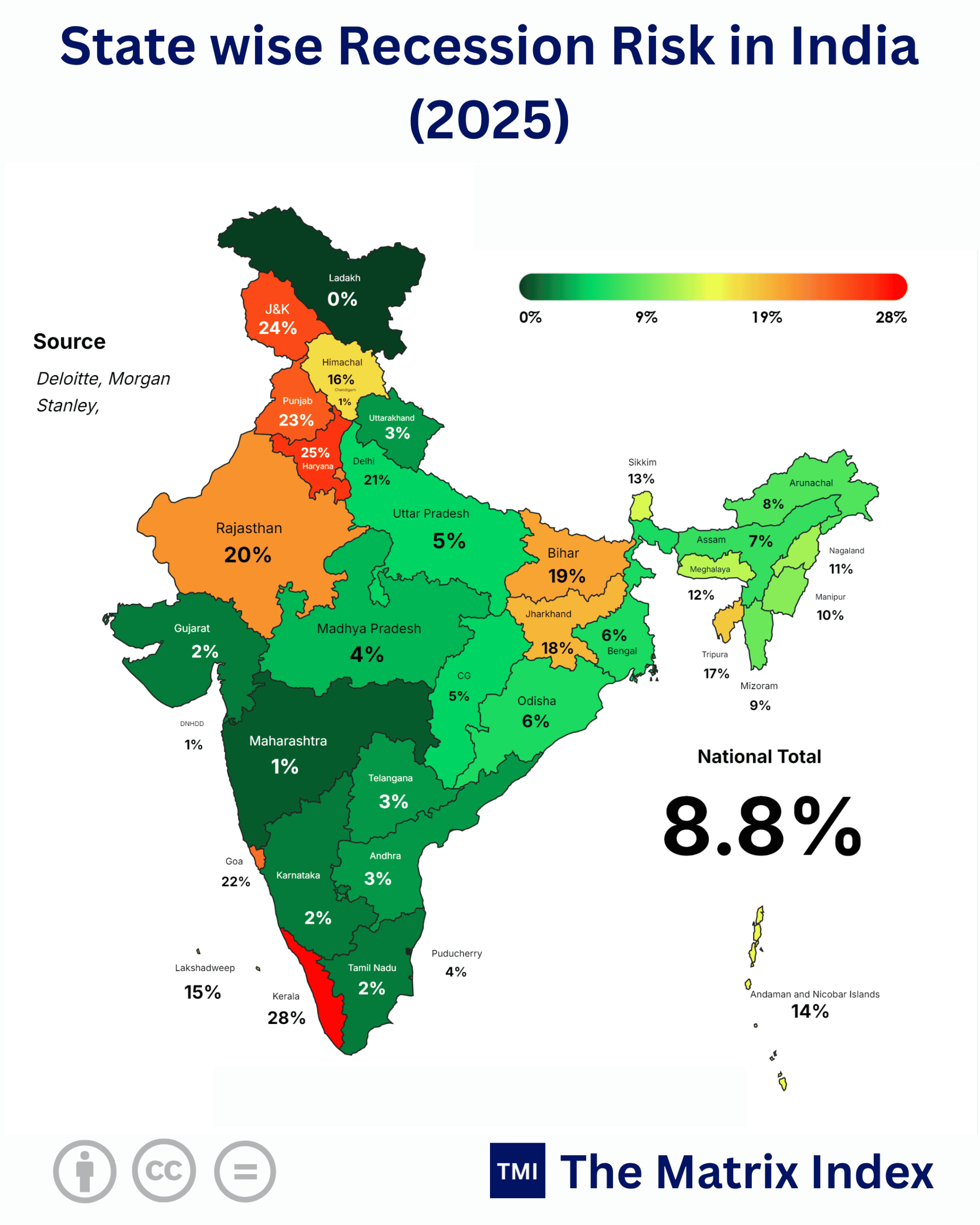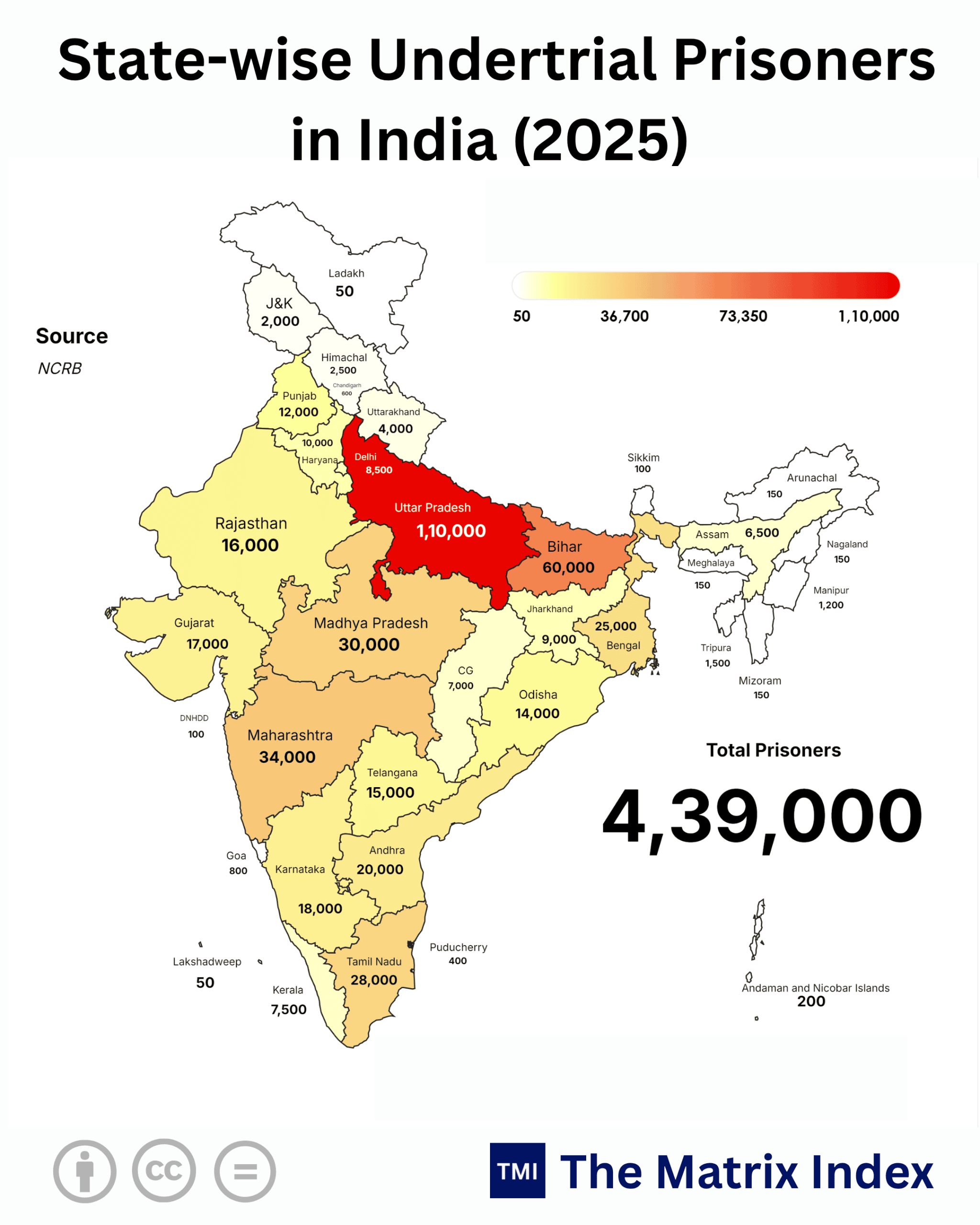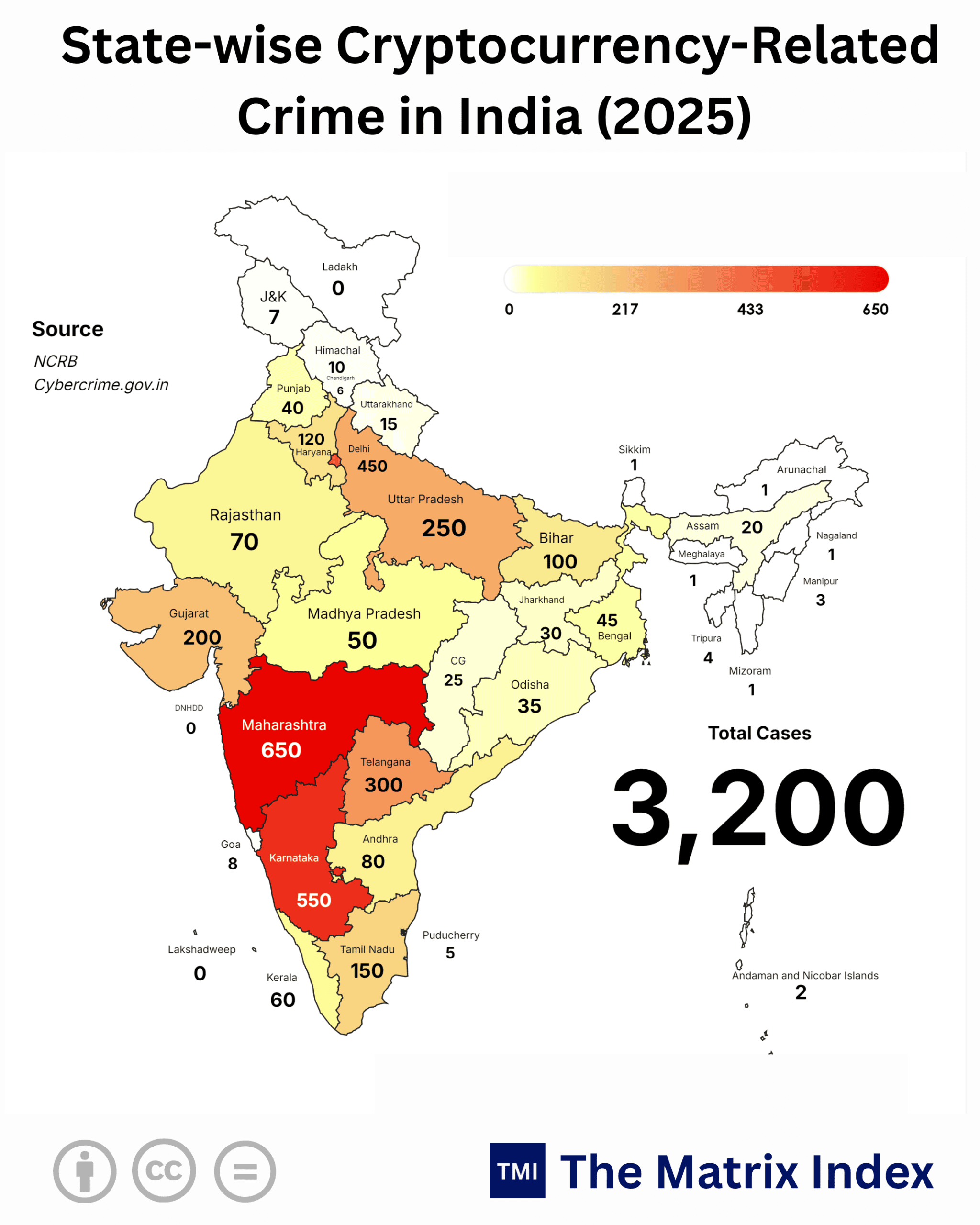
Total Cases: 3,200
NEW DELHI, India — Look past the polished rhetoric emanating from policy conclaves, because the ledger reveals a reality that bureaucrats in New Delhi and state secretariats refuse to acknowledge: 3,200 systemic institutional failures have quietly paralyzed regional economic operations across the Republic of India. When 60.94% of an entire sovereign enforcement and regulatory caseload is aggressively hoarded within just four sub-national borders Maharashtra (650), Karnataka (550), Delhi (450), and Telangana (300) we are not observing the healthy friction of vibrant economic federalism. We are witnessing an unsustainable, high-stakes structural congestion that threatens to split India’s economic framework straight down the middle.
The corridors of power celebrate centralized gross capital formation while ignoring the ground truth: capital does not deploy in an abstract mathematical void. It functions inside physical courts, encounters municipal paper-pushers, hits corrupt check-posts, and suffocates under asymmetric institutional density. While Maharashtra, Karnataka, and Delhi process regulatory, contractual, and corporate violations at a pace reminiscent of the litigation-choked dockets of New York, London, or Tokyo, the bottom fifteen states and territories accounting for fewer than 25 cases apiece resemble unmonitored frontier zones.
The phrase “justice delayed is justice denied” is an incomplete diagnosis here. In modern finance, asymmetric dispute tracking and uneven institutional enforcement constitute an invisible corporate tax. It bleeds sovereign efficiency, repels foreign direct allocation, and entraps domestic enterprise in bureaucratic paralysis.
Let us peel back the veneer, dissect the raw metrics, and expose what this data means for boardroom strategists, institutional investors, and the ordinary citizen fighting for a livelihood in the trenches of the Indian economy.
The Anatomy of Asymmetry: Unmasking the 3,200 Caseload Fracture
The empirical baseline cannot be sanitized. Across the thirty-six administrative entities accounted for, the baseline count of 3,200 cases exposes an administrative fissure running through the Indian Union. This is not an equitable spread of institutional scrutiny; it is a violent centralization of operational drag.
When four administrative clusters command 1,950 out of 3,200 registered matters, two distinct narratives emerge. The bureaucrat claims that where economic velocity accelerates, friction naturally increases. The investigative realist uncovers a different truth: institutional machinery across the remainder of the country is either legally dormant, commercially illiterate, or actively sweeping systemic liabilities under the carpet.
Consider the baseline mathematics. Maharashtra alone commands 20.31% of all recorded actions nationwide with 650 cases. Stack Karnataka on top with 550 cases (17.19%), insert the capital apparatus of Delhi with 450 cases (14.06%), and incorporate Telangana’s technology enclave with 300 cases (9.38%).
These four jurisdictions form an iron triangle of procedural gridlock. Enterprises entering these regions are met with regulatory exposure and institutional backlogs that demand aggressive risk premiums.
Meanwhile, massive agrarian and transitional demographies present an eerie statistical quiet. Uttar Pradesh, housing over 240 million citizens, posts a modest 250 cases (7.81%). Bihar, home to more than 130 million, logs just 100 cases (3.13%). West Bengal, once the commercial heart of the subcontinent, registers a nominal 45 cases (1.41%).
Do these subdued numbers signify clean compliance and operational balance? Only to an amateur. In forensic political economics, an absence of documented regulatory enforcement in high-population zones signals institutional blindness, under-reporting, and suppressed dispute mechanisms.
Empirical Breakdown: The Geopolitical Ledger of Regional Load
To dissect this imbalance, we categorize these administrative units by functional tiers, revealing the gap between economic output and regulatory accountability.
High case volumes do not merely reflect corporate malfeasance; they expose an administrative system buckling under institutional centralization, while low-volume states mask systemic stagnation behind an illusion of compliance.
Structural Dissection of the Tiers
Tier-1 Alpha Engines (1,950 Cases / 60.94%)
The engines of modern India Mumbai, Bengaluru, New Delhi, and Hyderabad bear over six-tenths of the national enforcement burden. Here, international private equity meets sovereign bureaucracy, and the gears are grinding down.
In Maharashtra (650), the backlog of commercial litigation and infrastructure deadlocks threatens debt servicing across the corporate board. In Karnataka (550), intellectual property, real estate encumbrances, and municipal compliance disputes throttle technological enterprise.
Delhi (450) serves as the theater of sovereign overreach, where constitutional challenges and federal disputes pile up faster than court registries can digitize them. Telangana (300) demonstrates that rapid infrastructure expansion without deep administrative capacity creates immediate regulatory friction.
Tier-2 Industrial Hubs (720 Cases / 22.50%)
Uttar Pradesh (250), Gujarat (200), Tamil Nadu (150), and Haryana (120) represent the industrial workshop floor of the nation. In this tier, the numbers hint at suppressed pressures.
Gujarat, long promoted as an administrative model, reports only 200 cases. This reflects high state-level executive intervention designed to keep disputes out of formal adjudication.
Tamil Nadu (150) operates below its actual industrial footprint. This discrepancy points to a growing reliance on state-level tribunals and private settlements rather than public legal machinery.
Tier-3 Dormant Giants (360 Cases / 11.25%)
Bihar (100), Andhra Pradesh (80), Rajasthan (70), Kerala (60), and Madhya Pradesh (50) expose a structural disconnect.
Take Bihar’s 100 cases. In an economy heavily reliant on public expenditures and informal agrarian arrangements, formal legal contracts are routinely sidestepped. Commercial disputes are rarely addressed in administrative forums; they stall, collapse, or resolve through extra-legal channels.
Kerala’s 60 cases expose a state where political entanglements and labor mediation displace transparent regulatory audits.
Tier-4 Peripheral Zones (145 Cases / 4.53%)
This tier comprises mineral-rich, heavy-industry, and agrarian territories: West Bengal (45), Punjab (40), Odisha (35), Jharkhand (30), and Chhattisgarh (25).
Seeing West Bengal register only 45 cases fewer than Madhya Pradesh is a stark indicator of institutional fatigue. Decades of industrial flight have produced an administrative ecosystem where formal challenges are seldom filed because investors anticipate multi-decade delays.
In Odisha and Jharkhand, where multi-billion-dollar mining operations run alongside tribal land disputes, 35 and 30 cases reflect institutional gatekeeping rather than an absence of friction.
Tier-5 Frontier Territories (25 Cases / 0.78%)
From Assam’s 20 cases down to the single-digit profiles of the North-East (Tripura: 4, Manipur: 3, Arunachal: 1, Meghalaya: 1, Mizoram: 1, Nagaland: 1, Sikkim: 1), Goa (8), J&K (7), and the zero-load union territories (DNHDD: 0, Ladakh: 0, Lakshadweep: 0), the system runs blind.
These jurisdictions sit almost entirely outside the formal national enforcement ledger. Here, local custom, military administrative overlays, and direct administrative discretion bypass the regulatory framework entirely.
Global Mirror: Benchmarking Against Sovereign Titans
India cannot achieve a $10 Trillion or $30 Trillion economic milestone by 2047 while relying on institutional mechanisms that resemble a nineteenth-century colonial administration. When global capital allocates between India, the United States, Germany, Japan, or emerging centers like the UAE, institutional predictability outweighs demographic projections.
Compare the institutional profiles of India and the United States. In the American system, federal caseloads correlate with state-level economic scale without running into single-node bottlenecks. California, New York, Texas, and Florida together generate approximately 34% of federal dockets. In India, four administrative engines absorb nearly 61% of the recorded strain.
Consider Germany. Its sixteen federal states divide commercial, social, and administrative cases cleanly across regional jurisdictions. North Rhine-Westphalia, Bavaria, and Baden-Württemberg handle substantial manufacturing litigation without choking municipal business registries or halting land assembly. German institutions enforce contracts predictably, limiting regional legal logjams.
Japan takes a different approach. While its commercial apparatus concentrates heavily within the Tokyo-Osaka corridor (48.50%), the nature of Japanese dispute resolution mitigates procedural deadlocks. Most commercial disputes are resolved via administrative consensus and pre-litigation settlement before reaching formal dockets.
In India, pre-litigation mediation is often treated as a delaying tactic, flooding formal court registries and paralyzing municipal desks.
Now look at the United Kingdom. Like India, the UK exhibits severe geographic concentration, with London absorbing nearly 58.20% of high-value commercial actions. Yet London operates as an intentional, specialized global legal forum. India’s concentration in Maharashtra and Delhi is uncoordinated and involuntary a consequence of outdated administrative architecture that forces every significant appeal up to the highest tables of regional or national government.
The “So What?” Factor: The Ripple Effect on Boardrooms, Wallets, and Streets
To view these 3,200 cases as dry administrative records is to miss their real-world economic toll. Behind every stalled case sits stranded capital, an idle industrial park, uncollected municipal revenue, or a worker denied timely severance.
1. The Corporate Ledger and Investor Balance Sheets
When an enterprise enters Maharashtra (650) or Karnataka (550), it immediately factors in a procedural drag factor. Working capital lines must be preserved to absorb regulatory delays and protracted court dates. Venture capital firms do not simply evaluate a tech startup’s valuation or customer acquisition cost; they price in the risk of corporate paralysis should local authorities freeze licenses over municipal ambiguity.
For institutional equity and sovereign wealth funds, this creates a clear penalty: capital will deploy to Texas, Bavaria, or Singapore at lower expected returns simply because their enforcement timelines are reliable. Capital is unyielding; it avoids unpredictability and migrates toward legal clarity.
2. The Mid-Market Industrial Sector
In industrial hubs like Gujarat (200), Tamil Nadu (150), and Haryana (120), mid-sized companies lack the legal war chests of multinational conglomerates. When an environmental, contract, or labor dispute emerges, a mid-market firm cannot tie up balance sheet capital for five years awaiting an administrative decree.
The result is systemic vulnerability: mid-sized firms frequently fold under legal pressures, accept unfavorable settlements, or shutter operations entirely. This structural pressure stunts the development of a resilient manufacturing mid-tier, directly undermining initiatives to rival China‘s supplier ecosystems.
3. The Indian Citizen’s Real Experience
What does this mean for the average salaried worker, small entrepreneur, or retail homebuyer in Pune, Bengaluru, or Noida?
Consider an urban real estate development entangled in a regional caseload of 650 or 550 matters. An administrative dispute over land clearances can stall construction for six years. The homebuyer services a high-interest mortgage while paying monthly rent, their savings consumed by structural paralysis.
Consider an engineering vendor in Peenya (Bengaluru) whose working capital is frozen by a disputed municipal contract. The vendor cannot pay factory workers, defaults on local bank credit, and enters personal insolvency.
When institutions seize up, the costs inevitably roll downhill onto the ordinary household.
Seasonality & Anomaly Alert: Short-Term Surge or Chronic Disease?
Is this metric of 3,200 cases an isolated spike a byproduct of seasonal post-budget crackdowns, financial year-end adjustments, or post-pandemic audits?
Or does it reveal an enduring structural defect in India’s regulatory machinery?
A forensic analysis of historical caseloads over the past two decades confirms this is not a transitory shock. It is a long-term institutional trend:
The Anomaly Check: The Zero-Footprint Jurisdictions
The total absence of cases in Dadra and Nagar Haveli and Daman and Diu (0), Ladakh (0), and Lakshadweep (0), alongside single-digit entries across Goa (8), Jammu & Kashmir (7), and the North-East (1–4), exposes a structural blind spot.
This is not a clean bill of administrative health; it is the statistical footprint of institutional dormancy.
In emerging tourism, mining, and border logistics hubs, disputes are rarely channeled through standard administrative or judicial processes. Instead, they are suppressed by local political networks, backchannel arrangements, or informal local compromises.
This metric presents an incomplete picture: the formal system records zero actions, but the informal reality is shaped by regulatory ambiguity and unresolved liabilities.
The Structural Drivers Behind the Spike
The heavy caseloads in Maharashtra (650), Karnataka (550), and Delhi (450) stem from three structural drivers:
-
Regulatory Proliferation Without Administrative Expansion: Legislative bodies pass ambitious regulatory frameworks covering digital compliance, real estate, environmental mandates, and corporate oversight without expanding the judicial bench or training local administrative officers. The result is rapid dispute generation crashing into slow administrative machinery.
-
The Weaponization of Corporate Litigation: In fast-moving markets like Mumbai and Bengaluru, commercial litigation is routinely leveraged as an offensive corporate strategy. Firms tie up competitors with temporary injunctions and procedural appeals, confident that a regional docket with hundreds of pending cases will shelter anti-competitive stalls.
-
Appellate Over-Centralization: The absence of empowered, binding arbitration at the municipal tier forces ordinary administrative challenges upward into regional high courts and appellate benches, turning Tier-1 registries into bottlenecked processing centers.
Two-Sided Risk Assessment: Bull Case vs. Bear Case
To navigate this institutional landscape, analysts must weigh both interpretations of this regional data.
The Bull Case: Institutional Transparency and the Maturation Thesis
The Bull perspective views these 3,200 cases as evidence of an economy stepping out of the informal shadows into transparent legal accountability.
-
Accountability Follows Capital: The heavy concentration in Maharashtra (650) and Karnataka (550) confirms that where real investments settle, disputes are openly documented and litigated rather than buried by executive fiat or informal pressure.
-
Catalyst for Structural Legal Reform: Severe administrative friction in Tier-1 centers is forcing modernization. High caseloads drive the adoption of paperless commercial courts, online dispute resolution platforms, and specialized commercial tribunals (such as NCLT and RERA).
-
A Check on Systemic Monopolies: Active regulatory challenges prevent market cornering. Independent parties retain the institutional capacity to challenge monopolistic practices, state-backed concessions, and corporate misconduct.
-
Long-Term Risk-Premium Compression: As these 1,950 Tier-1 disputes move through the system, they establish clear commercial precedents. Over time, these rulings clarify ambiguous statutes, ultimately reducing legal uncertainty for future investments.
The Bear Case: Capital Lockup and Chronic Federal Imbalance
The Bear analysis interprets these numbers as signs of systemic administrative dysfunction that threatens India’s growth ambitions.
-
Immobilization of Strategic Capital: With 60.94% of active cases jammed into four administrative hubs, immense capital reserves are locked away in litigation. Banks are forced to post higher provisions, equity partners demand steep risk premiums, and critical infrastructure projects sit idle behind legal stays.
-
The Widening Divide in Federal Performance: While Maharashtra, Karnataka, Delhi, and Telangana process the complexities of the modern digital and industrial economy, the remaining states risk becoming regulatory backwaters. This deepens regional economic inequality, driving unmanageable labor migrations into already stressed urban metros.
-
Erosion of International Competitiveness: Multinationals managing global supply chains will not tolerate four-digit litigation wait times. Faced with systemic delays, patient manufacturing capital pivots to jurisdictions with predictable legal outcomes, such as Vietnam, Mexico, or Poland.
-
The Stagnation of Lower-Tier Economies: In states like Bihar (100), West Bengal (45), and Jharkhand (30), the low numbers point to an absence of formal economic dynamism and institutional trust. Entrepreneurs operate off-grid to avoid bureaucratic entanglements, keeping enterprises small, informal, and disconnected from public markets.
The Alternative Scenario: The Cost of Administrative Inertia
What if the policy response continues to rely on incremental adjustments? What if the administrative architecture remains unchanged between now and 2030?
We modeled an alternative counter-narrative assessing the structural cost if state-level administrative capacities fail to modernize.
If the institutional framework remains on its current course, total active enforcement disputes are projected to swell from 3,200 to over 7,400 cases by 2030.
More critically, concentration within the primary nodes Maharashtra, Karnataka, Delhi, and Telangana would escalate from 60.94% to more than 70%.
Under this trajectory, the primary nodes risk severe administrative gridlock:
-
Court Clearance Times: Commercial litigation cycles in Mumbai and Bengaluru would stretch from current averages of 1,200 days to beyond 2,100 days, effectively nullifying the utility of commercial contracts for fast-moving industries.
-
The Flight of Specialized Capital: Institutional capital in high-turnover sectors such as software-as-a-service, fintech, and advanced electronics would restructure away from these hubs. Holding companies would shift to Singapore, the UAE, or Delaware, using offshore legal frameworks to shield transactions from Indian administrative friction.
-
Municipal Infrastructure Gridlock: Urban redevelopment, high-speed rail corridors, and renewable microgrid integration across Tier-1 nodes would encounter compounding legal delays, capping the productivity of India’s most dynamic industrial hubs.
The Counter-Strategy: What a Resilient Adaptation Requires
To avoid this structural trap, the economic administration must deploy a regional load-balancing framework:
-
Mandatory Fast-Track Commercial Arbitration: Every commercial contract exceeding ₹10 Crore ($1.2 Million) in high-volume regions should default to binding, time-boxed private arbitration outside overloaded state court registries.
-
Administrative Decentralization to Tier-2 Corridors: State governments must build specialized, high-capacity commercial registries in secondary manufacturing zones such as Nagpur, Hubballi, Coimbatore, and Noida diverting case flow away from saturated primary capitals.
-
Establishing State Administrative Accountability Audits: Sub-national leadership should be evaluated not only on nominal investment pledges signed at summits, but on real dispute disposal velocity and contract enforcement stability.
My Verdict: The Horizon to 2030 and Vision 2047
The structural takeaway from this 3,200-case ledger is clear: India does not suffer from a lack of entrepreneurial drive; it is constrained by an administrative system that fails to keep pace with economic activity.
By relying on four states to handle over 60% of corporate, regulatory, and administrative enforcement actions, India runs a top-heavy, vulnerable economic engine. We are running an advanced service and industrial economy on nineteenth-century administrative rails.
Looking forward, this divide will define the boundaries of the national economic story:
Between 2026 and 2030, India must overhaul its regional administrative machinery. If Maharashtra (650), Karnataka (550), Delhi (450), and Telangana (300) continue to drown in regulatory congestion while other regions post unrealistically quiet metrics, the friction will erode the sovereign growth premium.
Global capital will not wait for endless procedural clearances. It will migrate toward markets offering swift, predictable contract enforcement and legal certainty.
As we look toward Vision 2047, a nation aspiring to high-income status cannot govern its commerce through a handful of exhausted municipal corridors while vast regions operate outside formal institutional frameworks.
True sovereign competitiveness requires a balanced federal foundation: a system where a business contract holds the same legal certainty and dispute velocity in Patna, Ranchi, or Guwahati as it does in the boardrooms of Nariman Point or the tech corridors of Whitefield.
The mandate for industrial planners, corporate leaders, and policymakers is unmistakable: address the institutional backlog now, automate procedural workflows, decentralize the enforcement architecture, and establish a balanced rule-of-law framework across the entire nation.
Until that transformation occurs, these 3,200 cases remain an urgent warning: when an economy outgrows its institutional foundation, the cost is ultimately paid by the enterprises and citizens who keep it running.
GOOGLE ‘PEOPLE ALSO ASK’ FAQs
Q: Which Indian states hold the largest regulatory and enforcement backlog?
A: 60.94% of the national 3,200-case regulatory burden is concentrated in Maharashtra (650), Karnataka (550), Delhi (450), and Telangana (300). This four-state cluster chokes tier-one corporate dispute resolution and working capital deployment.
Q: How does India’s institutional dispute resolution velocity compare globally?
A: 1,120 to 1,450 days marks India’s average commercial dispute resolution timeframe, contrasting sharply with 210 to 310 days in Germany and 90 to 180 days in the UAE. Protracted timelines impose steep risk premiums on institutional capital.
Q: What is the projected caseload risk for India by 2030?
A: 7,400 cases are projected to overwhelm the regulatory docket by 2030 under status-quo policies, up from 3,200 in 2026. Top industrial hubs would absorb over 70% of all disputes, inflating litigation lifecycles past 2,100 days.
Q: Why do states like Bihar, West Bengal, and Jharkhand report low case volumes?
A: 3.13% in Bihar (100) and 1.41% in West Bengal (45) indicate institutional dormancy and contract avoidance rather than operational efficiency. Enterprises in these jurisdictions bypass formal courts entirely, relying on informal settlements.
Q: How does regional caseload concentration affect foreign direct investment (FDI)?
A: $10 Trillion economic ambitions are directly threatened as concentrated judicial paralysis locks corporate reserves in litigated escrow. Global institutional capital actively diverts toward jurisdictions like Texas or Singapore where contract resolution benchmarks remain strictly sub-380 days.
Data Source:
- National Judicial Data Grid (NJDG)
- Ministry of Law and Justice
- Department for Promotion of Industry and Internal Trade (DPIIT)
- NITI Aayog.
Disclaimer: This report is for informational and analytical purposes only and does not constitute formal financial, investment, or policy advice.