The Trillion-Rupee Black Hole: Exposing the Human and Macroeconomic Catastrophe of 439,000 Undertrials
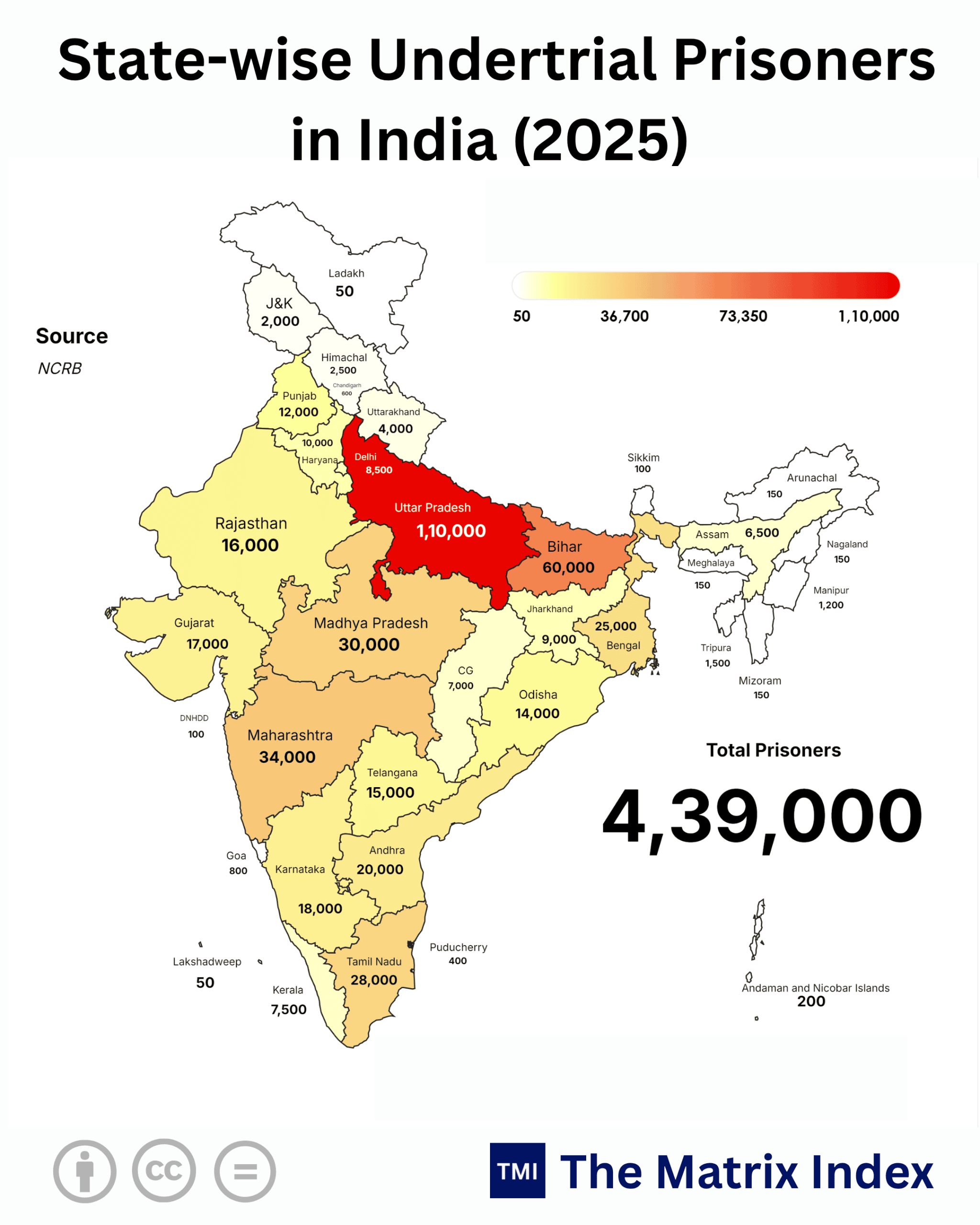
Total Prisoners: 4,39,000
NEW DELHI, India — If you want to see where a nation’s demographic dividend goes to die, walk past the razor wire of an Indian central penitentiary. Right now, behind those damp limestone walls, 439,000 human beings are locked away in institutional purgatory. They have not been convicted of a single crime. Under the Constitution, every single one of them is legally innocent.
Yet they sit on cold concrete floors, stripped of their economic output, draining state budgets, and waiting for an overburdened justice system to remember their names.
Let us dispense with the sterile legal jargon. This is not merely a human rights dilemma discussed in elite corridors over single-malt whiskey; it is a full-blown macroeconomic haemorrhage. We are witnessing an economic slaughterhouse running at an industrial scale.
When a modern economy locks up an entire tier-2 city’s worth of its prime working-age population without trial, it creates a systemic shockwave that tears through consumer spending, destroys fiscal balance sheets, and torpedoes long-term productivity targets.
Consider the baseline mathematics. The median age of these 439,000 individuals is roughly 28 years. These are not geriatric corporate fraudsters; they are young blue-collar laborers, gig-economy drivers, factory line operators, smallholders, and urban service workers.
They are the structural backbone of India’s demographic pyramid. Instead of contributing to gross domestic output, upskilling, and paying indirect taxes, they are consuming tax revenue simply to remain alive in overcrowded barracks.
We are actively paying our own state apparatus to destroy our most valuable economic asset: aggregate human labor.
The Great Indian Pre-Trial Ledger: A Map of Institutional Failure
The distribution of this pre-trial crisis is not random. It traces the historic fault lines of administrative inertia, poverty, and judicial neglect.
A granular examination of the data reveals stark territorial imbalances that mock the very idea of uniform legal rights across the republic.
The concentration at the top of this table is alarming. Uttar Pradesh alone hosts 110,000 undertrial prisoners accounting for over 25% of the entire national backlog. Pair that with Bihar’s 60,000, and two contiguous northern states house nearly four out of every ten unconvicted prisoners in India.
These are the same states relying on remittances, facing high underemployment, and struggling to build modern industrial bases.
Instead of turning their demographic swell into manufacturing powerhouses, their judicial infrastructure operates as an administrative holding pen for the marginalized.
The Macroeconomic Burn: Calculating Direct Fiscal Costs and Lost Output
Let us run the balance sheet that no finance minister dares to table in Parliament. To understand this financial drain, we must break down the numbers into cold, unyielding cash metrics.
Keeping a human being locked in an Indian prison is not cheap for the taxpayer, even if conditions remain sub-human. Across major Indian states, the average budgetary allocation per inmate ranges between ₹38,000 and ₹52,000 annually.
This covers food, prison staff salaries, armed transport escorting them to court appearances, maintenance of aged infrastructure, and basic medical care. Taking a conservative baseline of ₹45,000 per prisoner per year, the direct fiscal cost of maintaining 439,000 undertrials sits at ₹1,975.5 Crore (roughly $235 million USD) every single year.
Now factor in the lost gross output the opportunity cost. These 439,000 men and women are overwhelmingly within the prime productivity bracket of 18 to 40 years.
Assume an average annual contribution to Net National Product equivalent to a standard semi-skilled or unskilled informal wage: roughly ₹180,000 per annum (a modest ₹15,000 per month). By locking them away from the labor market, the Indian economy loses ₹7,902 Crore in direct value generation every year.
Nearly ₹10,000 Crore vanished into thin air, every 365 days. That does not account for the peripheral destruction: legal fees paid to predatory village advocates, ancestral agricultural plots mortgaged to cover bail bonds, and families pushed into generational debt spirals.
When you drain capital from the bottom 40% of the economic pyramid, you crush household consumption demand at the grass roots.
Global Benchmarks: How Civilized Capitalist Economies Manage Pre-Trial Detention
How does this compare to the rest of the industrialized world? It is a stark contrast.
In India, undertrials make up roughly 77% of the total incarcerated population. Let that sink in: fewer than one in four inmates in an Indian prison has actually been found guilty by a court of law.
Tier-1 Benchmarks: Rule of Law as Capital Infrastructure
-
United States: While the US incarcerates at a higher absolute rate, its pre-trial inmate percentage hovers around 22% to 25%. The American system relies heavily on statutory speedy trial acts and structured federal bail guidelines.
-
United Kingdom: The pre-trial remand population is strictly tracked, capped at around 15% to 18% of total inmates, with statutory custody time limits enforcing fast-tracked trials.
-
Germany: A powerhouse of legal efficiency where undertrials represent less than 20% of the prison system. Pre-trial detention (Untersuchungshaft) requires strict legal thresholds: demonstrated flight risk, danger of collusion, or severe repeat offenses.
-
Japan: Japan maintains an exceptionally low pre-trial detention footprint relative to its population, driven by swift administrative disposition, resulting in a pre-trial ratio below 12%.
-
Australia: Remand prisoners hover around 32% to 35%, a figure that has sparked public debate and subsequent structural legislative intervention down under.
Tier-2 Benchmarks: Emerging Markets Stumbling on Due Process
-
Brazil: Faces massive congestion with undertrials making up roughly 30% of its prisons, yet still far below India’s 77% structural gridlock.
-
South Africa: Undertrial figures sit near 33%, driven by post-apartheid judicial backlogs, but held in check by active constitutional review panels.
-
Mexico: Reforms transitioning from inquisitorial to adversarial oral trials have aimed to cut their historical pre-trial rate down from 42%.
India stands in a class of its own an outlier among major global economies. While projecting itself as the next frontier of global capital and manufacturing, its justice system locks up hundreds of thousands of unconvicted citizens for years on end.
Global institutional investors scrutinize sovereign risk through governance metrics. An institutional architecture that cannot process petty offenses within 24 months is not just an embarrassment; it is a red flag for foreign enterprise seeking stable contract enforcement.
The “So What?” Factor: The Domino Effect on the Real Economy
What does this mean for the person running a business or investing in Indian equities? Why should a venture capitalist in Bengaluru or an auto manufacturer in Chennai care about an undertrial languishing in a jail in Gorakhpur or Patna?
Here is the direct economic transmission mechanism:
-
Shattered Labor Mobility and Local Supply Bottlenecks: When 110,000 working-age hands in Uttar Pradesh and 60,000 in Bihar are pulled from the market, local supply chains feel it. Small-scale manufacturing, construction projects, and agrarian transport face persistent wage volatility and labor shortages. Contractors must pay premiums to replace working hands, driving up infrastructural completion costs across the board.
-
The Predatory Debt Trap and Destruction of Discretionary Consumption: When a breadwinner is detained, their family does not simply stop eating. They borrow. They turn to local loan sharks charging exorbitant interest rates often between 36% and 60% annualized collateralizing their farm equipment, cattle, or jewelry to pay legal retainers. Discretionary spending within these households crashes to absolute zero. This directly hits FMCG volumes, two-wheeler sales, and rural micro-finance loan repayments.
-
Taxpayer Capital Misallocation: Every rupee diverted to build more prisons, pay prison wardens, and feed unconvicted prisoners is a rupee stolen from primary healthcare, road electrification, and STEM education. We are subsidizing administrative failure rather than productive capital assets.
Seasonality and Anomaly Alert: Is This a Flash in the Pan or a Systemic Trap?
Do not be misled by quarterly variations or minor post-holiday dips in prison census data. This is not a seasonal anomaly driven by election-year policing or festive crackdowns. It is an entrenched secular trend.
The undertrial volume in India has climbed steadily over decades. Over the past twenty years, the ratio of undertrials to convicts has expanded from roughly 65% to over 77%.
The underlying structural causes are self-reinforcing:
-
Policed to Arrest, Not to Investigate: Police performance is rewarded by arrest numbers rather than high-conviction forensics. The easiest target is the informal laborer who cannot navigate the legal system or defend their rights.
-
The Archaic Bail Bond System: The Indian bail model relies heavily on financial surety. If a laborer cannot deposit ₹10,000 cash or produce a land title deed, they stay in jail, regardless of whether a judge has technically granted them bail.
-
Severe Shortage of Judges: India maintains approximately 21 judges per million people, compared to over 100 per million in the United States and 50 per million across Europe. The court calendar cannot keep pace with the volume of filings.
This is not a temporary backlog that a few special weekend court sittings can fix. It is an industrial gridlock baked directly into the system.
Two-Sided Risk Assessment: The Macro Trajectory Ahead
Bull Case: The Digitized Judiciary and Bail Automation Dividend
Under the optimistic model, policy shifts transform the justice landscape over the next five to seven years:
-
Algorithmic Bail and Personal Recognizance: The Union government aggressively enforces automatic recognizance bail under modernized criminal procedure codes for first-time, non-violent offenses carrying sentences under three years. Cash-based surety is replaced by biometric and identity tracking.
-
Massive Case Processing via Fast-Track Courts: The aggressive adoption of digital court records, paperless trials, and AI-assisted case scheduling cuts judicial pendency in half.
-
Economic Rebound: The undertrial tally drops from 439,000 down to 150,000 by 2032. Over 280,000 individuals return to the formal and informal workforce, injecting roughly ₹5,000+ Crore directly back into grass-roots consumer spending and saving the state nearly ₹1,300 Crore annually in custodial costs.
Bear Case: The Incarceration Spiral and Fiscal Drag
Under the pessimistic model, bureaucratic inertia and reactive policing carry the day:
-
Runaway Under-Capacity: State police forces lean harder on preventative detentions and blanket arrests to manage civic issues, while judicial vacancies stay stuck at 25% to 30%.
-
Prison Overcrowding Beyond Breaking Point: The national undertrial headcount surges past 600,000 by 2030. Prison occupancy rates in key states like Uttar Pradesh, Bihar, and Maharashtra breach 200% capacity, turning facilities into violent hotspots and public health liabilities.
-
Macro Drag on the Modernization Drive: Direct and indirect fiscal costs balloon past ₹20,000 Crore annually. Foreign institutional investors dock India’s governance and rule-of-law scores, raising sovereign borrowing spreads and dampening private capital expenditures.
The Alternative Scenario: What Happens If We De-Penalize Petty Offenses Tomorrow?
Imagine a decisive policy pivot: an executive and judicial order mandating the release of every undertrial prisoner held on bailable, non-violent charges for longer than six months on personal bonds.
What happens the next morning?
The immediate fiscal dividend would be massive. Over 200,000 individuals would walk out of custody within 60 days, wiping out half of the pre-trial maintenance bill and returning hundreds of millions of rupees to state budgets overnight.
Labor-starved micro-enterprises in Uttar Pradesh, Bihar, and West Bengal would find immediate working hands, stabilizing entry-level wages across agricultural and manufacturing hubs.
The standard counter-argument that crime rates would suddenly spike falls flat when you look at international examples. When jurisdictions in the UK and Australia transitioned minor property, transit, and misdemeanor offenses from cash remand to supervised community service, repeat offenses dropped.
Prison is a finishing school for serious criminality. Exposing an impressionable 22-year-old held on an unsubstantiated petty accusation to hardened criminal networks inside a crowded cell creates the very public safety crisis it claims to prevent.
State-Level Deep Dive: The Engines of Disparity
Uttar Pradesh & Bihar: The Northern Stagnation Core
The fact that 170,000 undertrials are packed into just two northern states is the primary driver of national underperformance. In Uttar Pradesh (110,000) and Bihar (60,000), the systemic machinery breaks down at the local station house.
Overstretched district courts face hundreds of thousands of unresolved dockets. Inmates routinely wait three to five years simply for formal charges to be framed.
Families frequently fall below the poverty line solely to fund bus trips to distant district courts, only to hear that the judge was on leave or the police escort failed to show up.
Maharashtra, Tamil Nadu & West Bengal: The Industrial Paradox
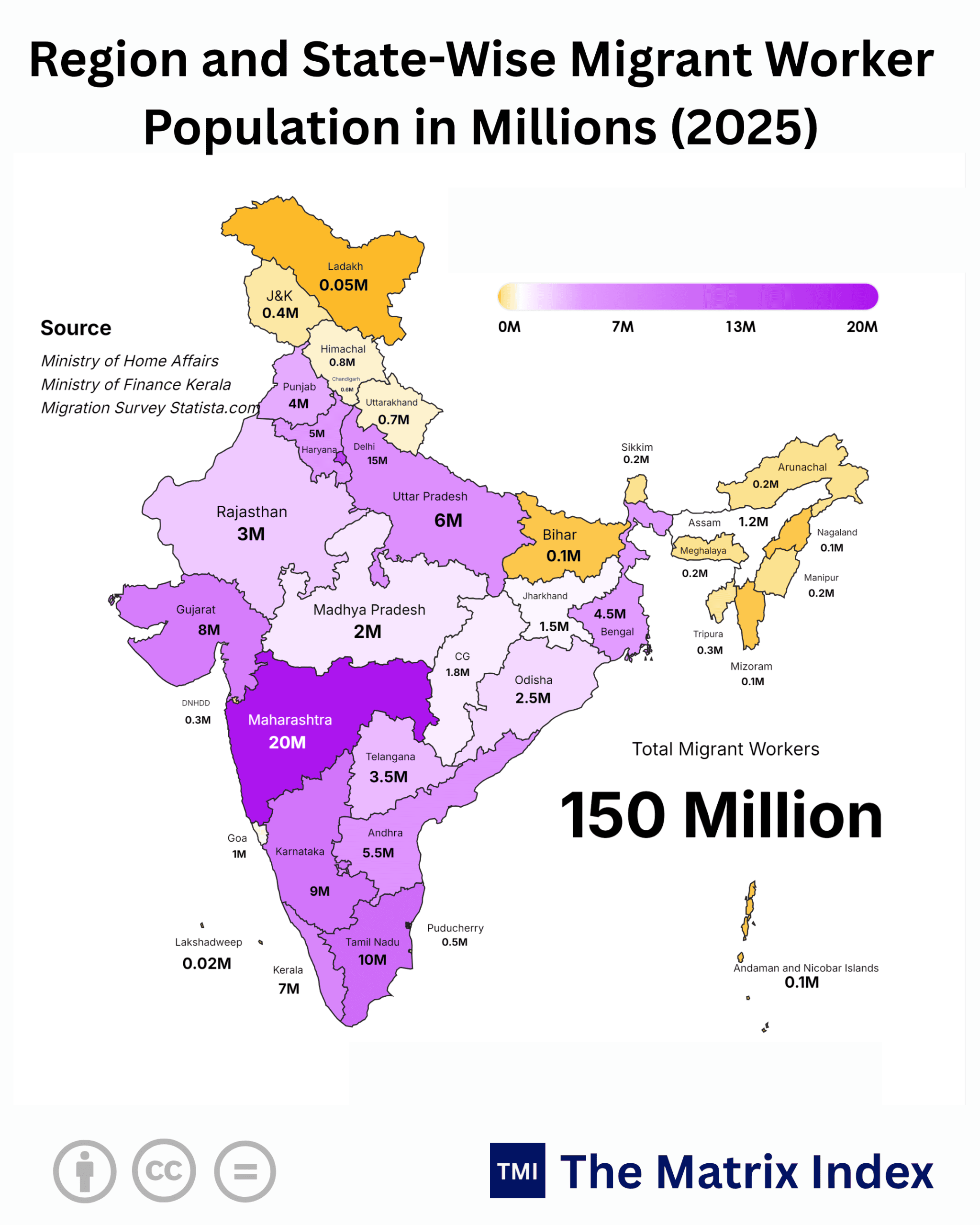
In wealthier, more industrialized states like Maharashtra (34,000), Tamil Nadu (28,000), and West Bengal (25,000), the bottleneck looks different: it is driven by migrant labor vulnerability.
Workers coming in from other parts of the country lack local address proofs, family networks, or assets to post bail. When pulled in during broad police sweeps, they have no local guarantor to step forward.
They remain locked away not because their alleged crimes are severe, but because they are strangers in an industrial city.
The Small State Advantage: The North-East and Island Territories
Notice the bottom of the table: Sikkim (100), Ladakh (50), Lakshadweep (50), and Arunachal Pradesh (150). Beyond their small populations, these areas benefit from close-knit community dispute-resolution traditions and localized village mediation.
Civil disputes and minor altercations are handled through local panchayats or customary community institutions long before an official charge sheet is filed.
Mainstream urban centers have demolished traditional mediation frameworks without building an efficient modern court system to take their place.
Actionable Strategy: A Five-Pillar Blueprint for Systematic Reform
We cannot solve this crisis with symbolic speeches or piecemeal reforms. We need an aggressive, systematic plan that treats judicial delays as an economic emergency:
-
Scrap the Colonial Cash Bail Model: Transition immediately to algorithmic risk assessment combined with Aadhaar-backed personal recognizance bonds. If an individual poses no flight risk and no violent threat to the community, financial insolvency should never be the reason they sit in a jail cell.
-
Statutory Time-to-Trial Limits: Enact hard procedural cut-offs. If the prosecution fails to frame formal charges within 90 days for non-heinous offenses, automatic pre-trial release must trigger by operation of law, with zero judicial discretion permitted.
-
Expand Pre-Trial Diversion and Lok Adalats: Divert petty financial disputes, minor traffic incidents, and regulatory infractions away from the formal criminal docket into compulsory mediation and restitution programs.
-
Corporatize and Adequately Fund the Public Defender System: The current legal aid system relies on poorly compensated, unmotivated private practitioners. States must create a dedicated, well-funded Public Defender Service staffed by full-time litigators incentivized on speed of disposition and case dismissal rates.
-
Double the Judicial Headcount by 2030: Accelerate appointments across lower and subordinate judiciaries to push India’s judge-to-population ratio toward 50 per million. The capital investment required will pay for itself multiple times over in preserved economic output and reduced custodial expenses.
Structural Trajectory: 2026–2030–2047
India stands at an institutional crossroads:
The road to Viksit Bharat 2047 cannot be paved solely with high-speed expressways, digital payment networks, and advanced manufacturing incentives. An economy is only as durable as its foundational rule of law.
Leaving 439,000 citizens locked in limbo without a verdict is an economic failure that erodes capital productivity, damages credibility, and drains billions of rupees from the national balance sheet.
The numbers are in plain sight. The cost of inaction is quantified. The only missing variable is the political will to tear down an outdated, extractive procedural framework and build an efficient, modern justice system in its place.
GOOGLE ‘PEOPLE ALSO ASK’ FAQs
Q1: How many undertrial prisoners are currently lodged in Indian jails?
A: 439,000 individuals remain incarcerated across Indian prisons without a conviction, constituting approximately 77% of the entire national inmate population. Two northern states Uttar Pradesh with 110,000 and Bihar with 60,000 account for nearly 39% of this unconvicted workforce backlog.
Q2: What is the annual economic cost of undertrial detention in India?
A: ₹9,877.5 Crore ($1.18 Billion USD) is drained annually from the Indian economy through undertrial congestion. This total combines ₹1,975.5 Crore in direct state prison maintenance costs and ₹7,902 Crore in forfeited gross output from working-age labor.
Q3: Why do undertrials make up over 75% of India’s prison population?
A: 21 judges per million citizens and an inflexible cash-surety bail structure create procedural paralysis across lower courts. Indigent laborers cannot deposit bail collateral or pay private attorneys, forcing unconvicted citizens into prolonged custodial remand for non-heinous allegations.
Q4: Which Indian states have the highest number of undertrial inmates?
A: 110,000 undertrials reside in Uttar Pradesh, followed by Bihar with 60,000 and Maharashtra with 34,000. Madhya Pradesh holds 30,000 and Tamil Nadu holds 28,000, concentrating the nation’s severe pre-trial labor loss within industrial and agricultural hubs.
Q5: How does India’s pre-trial detention rate compare to global economies?
A: 77% pre-trial detention ranks India among the highest globally, compared to Germany’s sub-20%, the UK’s 18%, and the US’s 25%. Even emerging peers like Brazil maintain around 30%, highlighting an extreme structural outlier among major global markets.
Data Source:
- National Crime Records Bureau (NCRB)
- Ministry of Home Affairs
- Government of India
- National Legal Services Authority (NALSA).
Disclaimer: This report is for informational and analytical purposes only and does not constitute formal financial, investment, or policy advice.