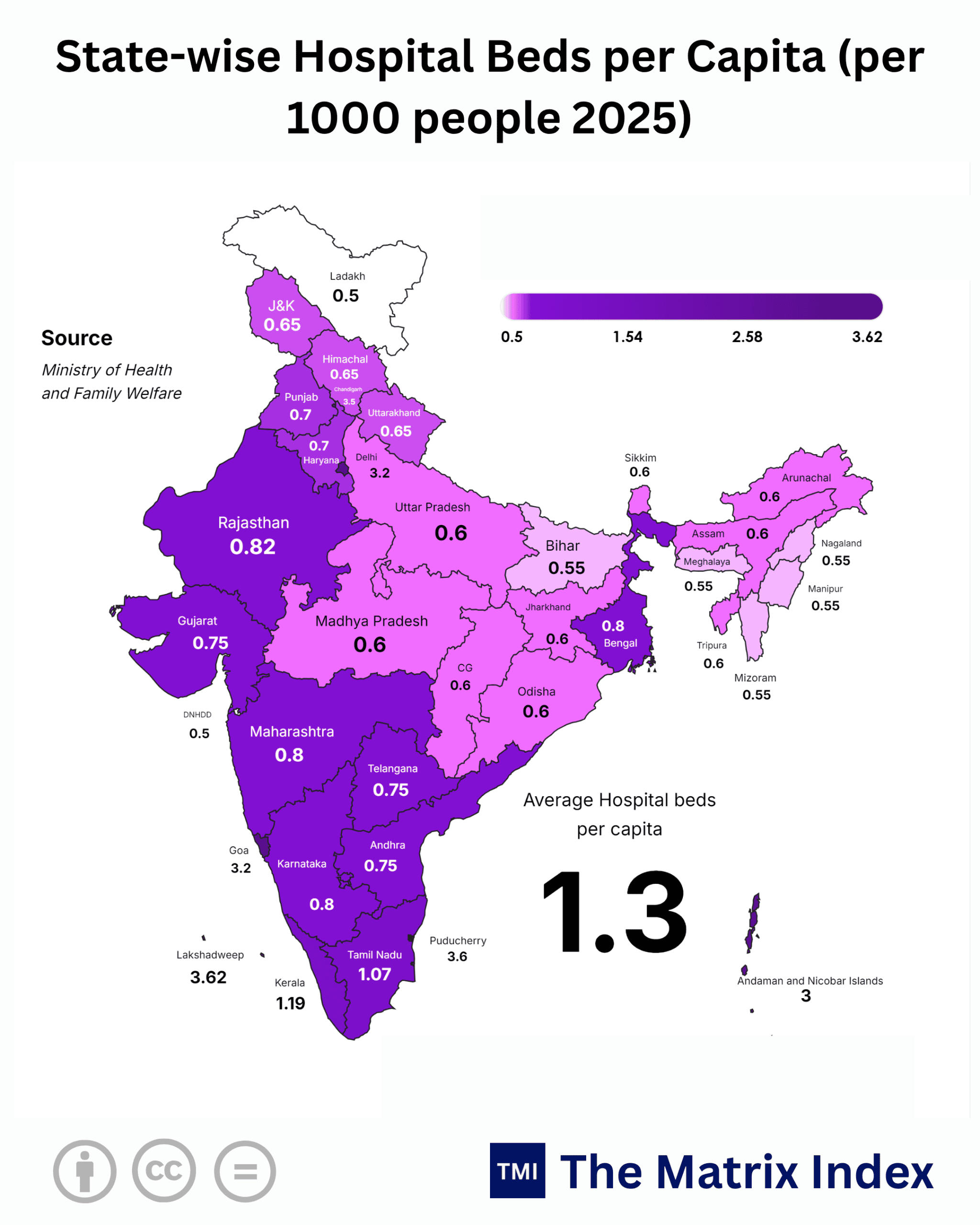
NEW DELHI, India — If you fall critically ill tonight in the heartland of the world’s fifth-largest economy, your statistical odds of securing an acute-care hospital bed are worse than in sub-Saharan Africa. That is not hyperbole; it is the mathematical verdict of newly consolidated health ministry metrics for 2025–2026.
While Dalal Street celebrates record capital expenditure and geopolitical strategists applaud India’s inevitable march toward a $5 Trillion and eventual $10 Trillion economic powerhouse, the physical infrastructure keeping that demographic dividend alive is running on a structural deficit so severe it threatens to wipe out 1.5% to 2.8% of annual GDP growth through catastrophic household out-of-pocket expenditure and labor productivity collapse.
THE GREAT HEALTHCARE DIVIDE: ANATOMY OF A CRACKING FOUNDATION
Look closely at the national map, and the illusion of a unified economic powerhouse instantly fractures into two starkly different realities. On paper, India claims a national average of 1.3 hospital beds per 1,000 people. That number alone fails the baseline World Health Organization (WHO) minimum benchmark of 3.0 beds per 1,000 people.
The headline figure of 1.3 is a deceptive statistical blend. It masks a chasm between a handful of medicalized union territories and southern states, versus the massive northern-eastern demographic basin where nearly 600 million citizens live under sub-zero institutional healthcare security.
In Bihar, the ratio collapses to an abysmal 0.55 beds per 1,000 people. In Uttar Pradesh, Madhya Pradesh, Chhattisgarh, Odisha, and Jharkhand, the ratio stagnates at an unforgiving 0.60.
Think about what 0.55 beds per 1,000 means in human terms: one single hospital bed shared dynamically among 1,818 people. When seasonal epidemics strike or chronic cardiovascular crises peak, rationing is not an administrative choice; it is an hourly triage on hospital floors.
Macro Capacity Disparity Across Indian States (2025–2026)
The Bitter Truth: Over 68% of India’s population lives in states where acute hospital capacity is less than one-third of the global safety line, leaving more than 850 million citizens vulnerable to sudden medical insolvency.
GLOBAL BENCHMARKING: WHERE INDIA STANDS AGAINST TIER-1 AND TIER-2 POWERS
Economic superpowers cannot run on sub-standard biological infrastructure. Let us strip away diplomatic rhetoric and examine cold, hard comparative healthcare capacity across the G20 and BRICS economies.
Take Japan at 12.60 beds per 1,000, or Germany at 7.80. These economies structured excess medical buffer capacity to withstand extreme demographic aging and biological shocks.
Look at China, an economy India frequently benchmarks against in manufacturing and export supply chains. Beijing expanded its capacity from 3.8 beds per 1,000 in 2010 to 6.70 beds per 1,000 by 2025.
China executed this expansion through state-mandated municipal infrastructure programs coupled with tier-based regional healthcare centers. India, by comparison, allocates just around 1.9% of its GDP to public health expenditure.
While the Union Government has set a target of 2.5% of GDP, state-level allocations remain anemic across the BIMARU belt, resulting in an out-of-pocket expenditure (OOPE) rate that hovers above 47%.
When a society pays for half its healthcare out of direct savings, every medical emergency becomes an economic tragedy that pushes middle-class households back into poverty.
THE “SO WHAT?” FACTOR: THE MACROECONOMIC RIPPLE EFFECT
What does this bed deficit mean for an investor, a corporate chief executive, or a middle-class family breadwinner?
Healthcare capacity is not an isolated social metric; it is the baseline capital investment that protects human labor output. When tier-2 and tier-3 cities lack public hospital beds, private multispecialty monopolies dictate pricing. An acute ICU admission in an urban center runs between ₹45,000 and ₹1,20,000 per day.
For a family earning the median household income of ₹25,000 to ₹40,000 per month, a 10-day hospitalization requires liquidating agricultural land, selling gold assets, or taking unsecured loans at 24% to 36% interest from local shadow lenders.
Over 55 million Indians are pushed below the poverty line every year solely due to healthcare financing shocks.
2. The Corporate Impact: Human Capital Depreciation
Corporations running manufacturing units in Gujarat (0.75), Maharashtra (0.80), or Uttar Pradesh (0.60) pay hidden taxes through chronic absenteeism, low operational stamina, and high employee attrition.
Preventable infectious diseases like dengue, viral pneumonias, and poorly managed chronic conditions like diabetes turn into multi-week work stoppages because employees cannot access timely primary and secondary bed facilities.
3. The Institutional Capital Impact: The Private Equity Boom
Private equity operators and institutional healthcare networks (Apollo Hospitals, Fortis, Max Healthcare, Manipal) have recognized this supply-demand distortion.
However, over 82% of private institutional bed capacity additions between 2021 and 2025 occurred exclusively in the top 8 Tier-1 metro areas.
Capital follows purchasing power, not demographic vulnerability. The result is a two-track healthcare economy: world-class medical tourism corridors in Delhi NCR (3.20), Chennai (Tamil Nadu: 1.07), and Bengaluru (Karnataka: 0.80), running alongside clinical deserts in rural UP and Bihar.
SEASONALITY & ANOMALY ALERT: THE MONSOON CRASH CYCLE
Is this crisis uniform throughout the year? No. India’s healthcare stress follows a vicious seasonal pattern: During the dry winter and spring months (January to April), bed occupancy across district hospitals averages 85% to 95%.
From July to October, the arrival of the southwest monsoon triggers surges in vector-borne and water-borne pathogens (Dengue, Chikungunya, Malaria, Leptospirosis, Typhoid) alongside acute enteric infections. During this period, occupancy rates in northern state civil hospitals spike past 180% of rated capacity. Patients are triaged onto floor mattresses, and two to three pediatric patients often share a single cot.
This annual spike is treated by state administrations as an unforeseen natural emergency. In reality, it is a predictable seasonal event operating on fixed calendar dates. Calling a recurring annual capacity failure an “anomaly” is an administrative excuse for chronic under-capitalization.
THE ECONOMIC ARCHITECTURE: CAPITAL EXPENDITURE VS. HEALTHCARE REALITIES
Why has the world’s most dynamic emerging market failed to build hospital rooms at the pace it lays four-lane expressways?
The answer lies in the structural economics of hospital infrastructure: Building a compliant, tertiary-care hospital bed requires between ₹60 Lakh to ₹1.2 Crore ($72,000 to $145,000) in upfront capital expenditure, excluding land acquisition costs in prime urban catchments.
Medical equipment (MRI suites, CT diagnostics, linear accelerators, catheterization labs) carries heavy import duties (7.5% to 15%) and depreciates within 5 to 7 years.
When private hospital chains build beds, they target an EBITDA margin of 18% to 24% with an average revenue per occupied bed (ARPOB) of ₹40,000 to ₹75,000 per day.
That financial hurdle cannot be met in Patna, Gorakhpur, or Ranchi, where local purchasing power cannot sustain private pricing and state reimbursement schemes under Ayushman Bharat (PM-JAY) pay fixed package rates often priced at or below real delivery cost.
The result is a structural market failure: the state assumes the private sector will step in, while the private sector focuses capital where commercial yields are highest.
Private vs Public Sector Health Allocation Landscape
The Golden Opportunity: Tier-2 and Tier-3 healthcare delivery represents an unpenetrated $45-Billion addressable market for asset-light, standardized secondary care models if viability gap funding and revised PM-JAY tariff packages are unlocked.
The Bull Case: The Aggregated Industrial Leap
The optimistic scenario relies on institutional reforms currently scaling across the subcontinent:
-
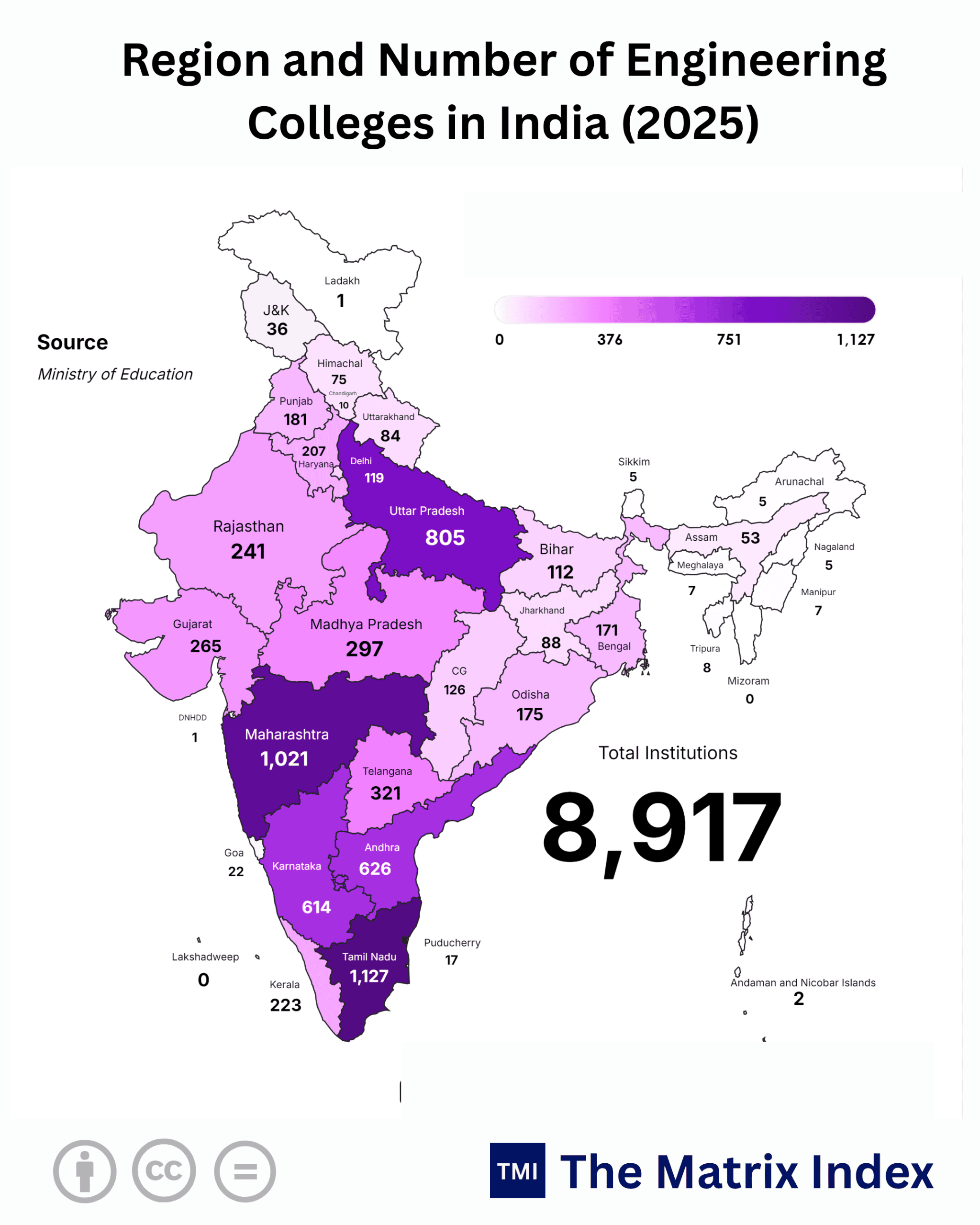
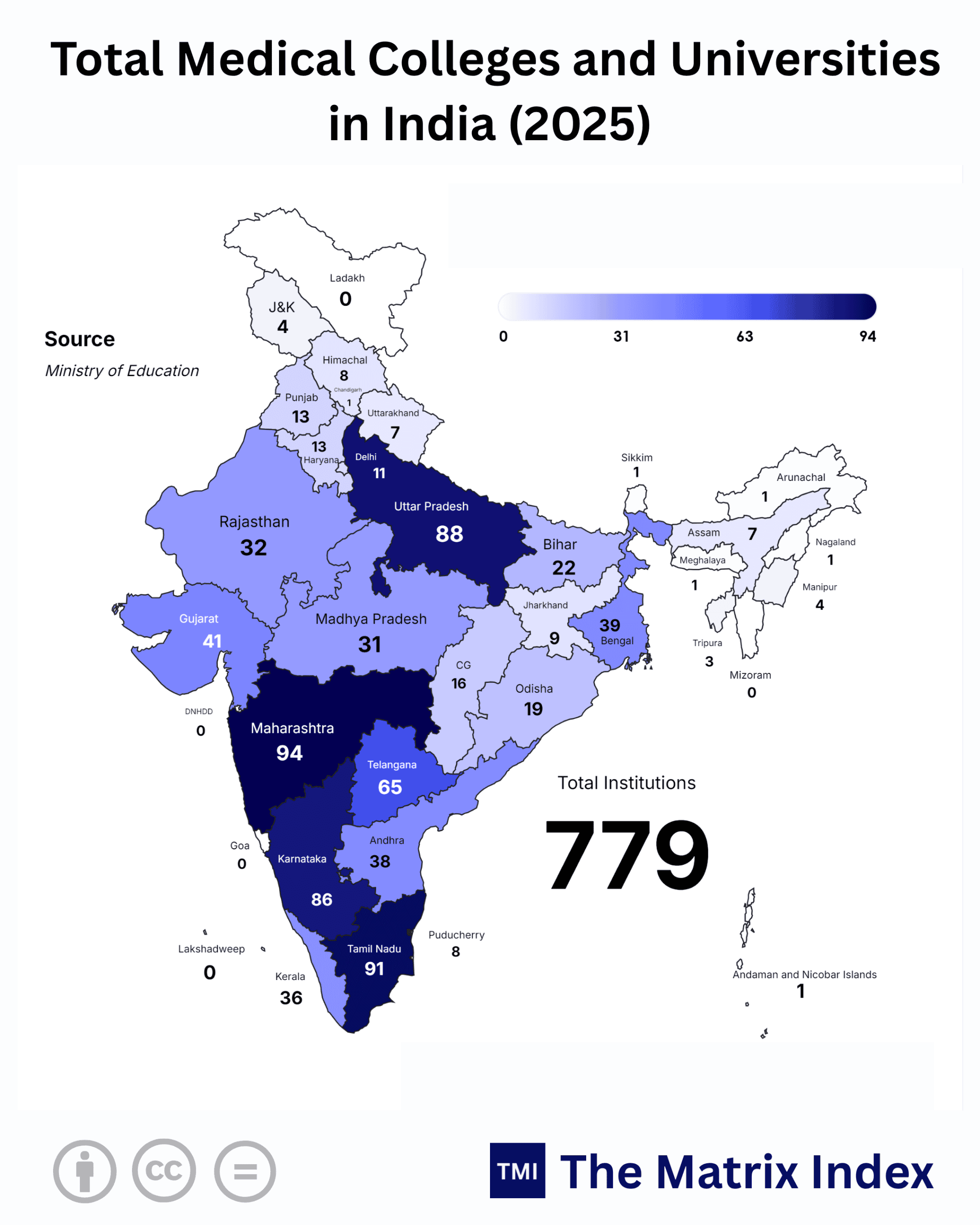
The Medical College Expansion Flywheel: The union initiative adding 157 new government medical colleges attached to existing district hospitals is beginning to shift bed availability, creating secondary and tertiary capacity in underserved districts.
-
Infrastructure Status and Institutional Debt: Granting long-term infrastructure lending status to healthcare assets allows developers to secure 20- to 25-year debt at competitive rates, reducing project breakeven thresholds.
-
Technological Capacity Multipliers: The deployment of Tele-ICU networks, remote monitoring, and automated diagnostics allows a single tertiary care center in a capital city to support hundreds of secondary beds in peripheral districts.
The Bear Case: The Structural Demographic Stall
The pessimistic scenario projects a worsening breakdown driven by three structural bottlenecks:
-
The Human Resource Desert: Physical buildings do not treat patients; qualified medical personnel do. While concrete structures can be built in 24 months, training a qualified intensivist, surgeon, or critical care nurse takes 8 to 12 years. India’s doctor-population ratio (0.9 per 1,000) and nurse-to-population ratio (1.7 per 1,000) create hollow structures where beds exist on paper but lack clinical staffing.
-
State-Level Fiscal Exhaustion: Heavily indebted states across the northern belt spend disproportionate revenues on revenue expenditure, subsidies, and debt servicing. Their fiscal capacity to sustain recurring medical budgets remains constrained.
-
The Non-Communicable Disease (NCD) Tsunami: Chronic conditions like cardiovascular disease, oncology, hypertension, and diabetes are rising across semi-urban populations. NCDs require prolonged bed utilization, higher average length of stay (ALOS), and expensive monitoring equipment. This shifts demand from short acute admissions to long-term bed occupancy.
THE ALTERNATIVE SCENARIO: DISRUPTION OF THE BRICK-AND-MORTAR MODEL
What if building 2.4 million physical hospital beds to hit the WHO benchmark by 2035 is capital-prohibitive? An alternative infrastructure model offers a pragmatic path forward:
The “Hospital-at-Home” Paradigm
Advances in point-of-care diagnostics, continuous wearable telemetry, portable oxygen concentrators, and decentralized nursing networks allow 30% to 40% of moderate medical conditions to be managed safely in residential settings.
By offloading stable cases to digitally monitored homes, existing hospital beds can be reserved strictly for intensive surgical interventions and mechanical ventilation.
Standardized Modular Pre-Fabricated Health Parks
Instead of building bespoke civil structures that take years to complete, state governments can deploy pre-engineered, modular 100-bed secondary hospitals along major highway corridors.
Constructed in under 120 days using steel frames and modular utility conduits, these facilities lower capital expenditure per bed by 40% to 50%, accelerating emergency capacity expansion.
THE ECONOMIC VERDICT: 2026 – 2030 – 2047 ROADMAP
As India accelerates toward its centenary of independence in 2047, its geopolitical standing as a developed economy (Viksit Bharat) will not be judged by headline market indices alone. It will be measured by the baseline social protection extended to its most vulnerable citizen in an emergency.
The Strategic Policy Blueprint:
-
Mandatory CapEx Match Grants: The Union Government must structure a dedicated ₹1.5 Lakh Crore ($18 Billion) Healthcare Infrastructure Challenge Fund, providing 40% direct viability gap grants to private and public-private consortiums building operational hospital beds in Tier-3 districts of the seven lowest-ratio states.
-
Medical Education Deregulation: Medical colleges must be decoupled from legacy real estate requirements, allowing regional general hospitals with 200+ beds to function as accredited training institutions. This would double physician and nursing throughput by 2030.
-
PM-JAY Tariff Overhaul: Re-index Ayushman Bharat package reimbursement rates to dynamic regional input costs. When procedure tariffs reflect operating costs, private facilities can open their doors to public insurance patients without risking financial ruin.
-
Tariff Waivers on Life-Saving Hardware: Eliminate customs duties and reduce GST to a flat 0% to 5% tier for all critical care medical devices, intensive care ventilators, and diagnostic hardware deployed outside Tier-1 municipal areas.
The Bottom Line
An economy running with an acute-care deficit across its demographic core is driving at high speeds without a spare tire. Closing the 2.4-million-bed gap is not a welfare luxury; it is a foundational macro-financial priority.
Without targeted capital allocation, the economic dividend of the coming decades will be drained by preventable healthcare crises. The blueprint is clear, the capital exists, and the window for structural reform is open.
GOOGLE ‘PEOPLE ALSO ASK’ FAQs
Q1: What is the current hospital bed ratio in India compared to the WHO benchmark? A: 1.3 beds per 1,000 people is India’s national average, falling far below the World Health Organization minimum standard of 3.0 beds per 1,000. This deficit leaves the country short by roughly 2.4 million acute-care beds.
Q2: Which Indian states have the lowest hospital bed capacity? A: 0.55 beds per 1,000 people makes Bihar the lowest-capacity state, followed closely by Uttar Pradesh and Madhya Pradesh at 0.60. Over 68% of the national population resides in regions facing severe acute medical shortages.
Q3: How does healthcare infrastructure scarcity affect household finances in India? A: 47.2% of national health spending comes directly out of pocket, driving over 55 million citizens into poverty each year. A single 10-day private ICU admission typically exhausts multiple months of median household income.
Q4: What is the projected capital investment needed to fix India’s hospital bed deficit? A: $18 billion across dedicated infrastructure funds is required to add 2.4 million beds by 2035. Constructing a single tertiary-care bed requires ₹60 Lakh to ₹1.2 Crore in capital expenditure.
Q5: What are the primary targets for India’s healthcare capacity by 2030 and 2047? A: 2.1 beds per 1,000 people is targeted by 2030, scaling to 3.5 beds by 2047. Meeting this roadmap requires expanding public healthcare expenditure to 4.5% of GDP and reducing out-of-pocket costs to 12%.
Data Source:
- Ministry of Health and Family Welfare (MoHFW)
- World Health Organization (WHO)
- National Health Mission (NHM)
Disclaimer: This report is for informational and analytical purposes only and does not constitute formal financial, investment, or policy advice.