The Great Healthcare Cartel: An Exhaustive Forensic Investigation into India’s 779-Institution Medical Education Bubble, Geographic Fractures, and the Looming 2047 Capitalist Shakedown
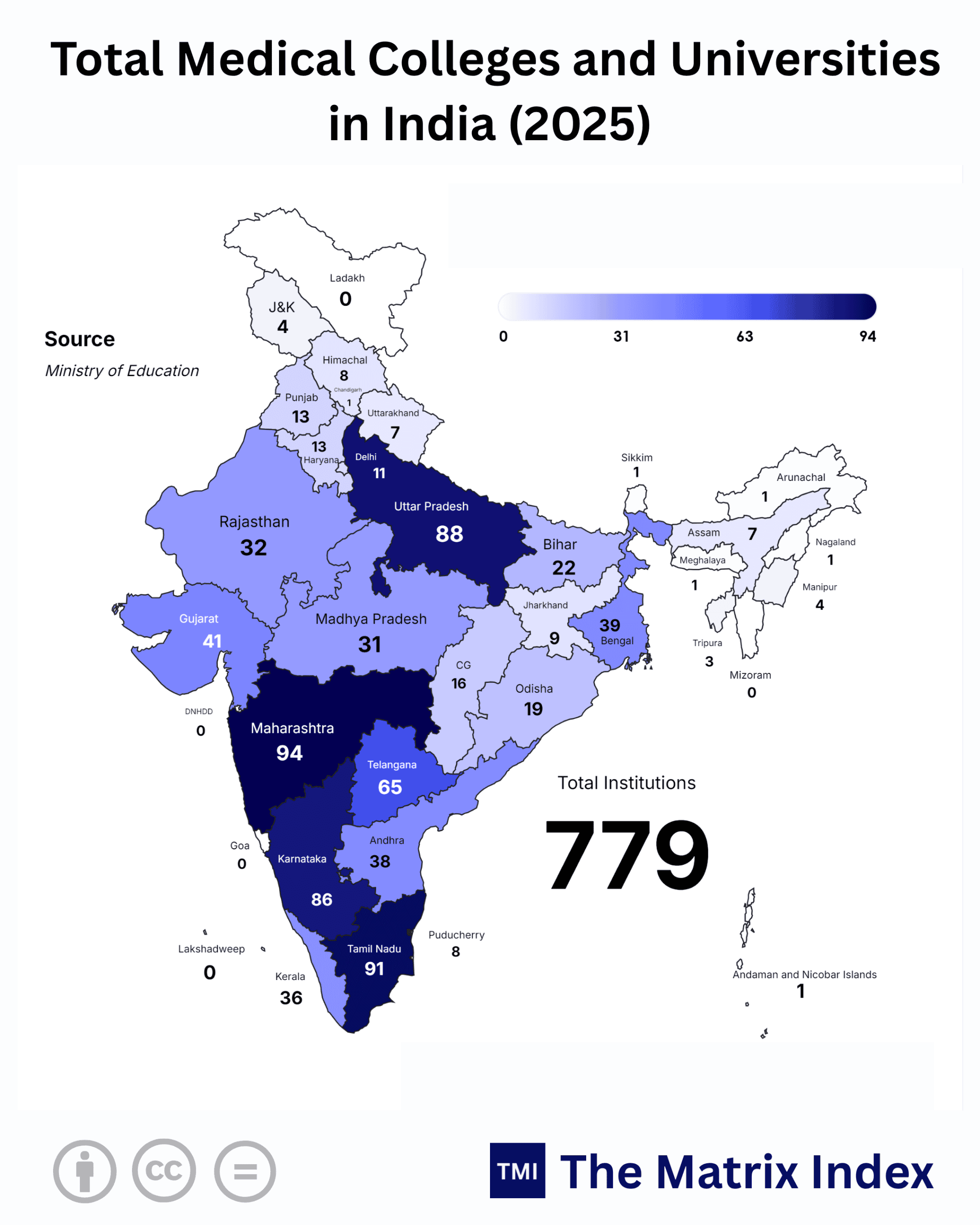
NEW DELHI, India — India does not run a healthcare system; it administers a cutthroat, highly financialized territorial real estate cartel disguised as academic medicine. Look across the country’s 779 medical colleges and universities. If you believe this number represents an equitable, rising public health fortress, you have swallowed pure policy propaganda.
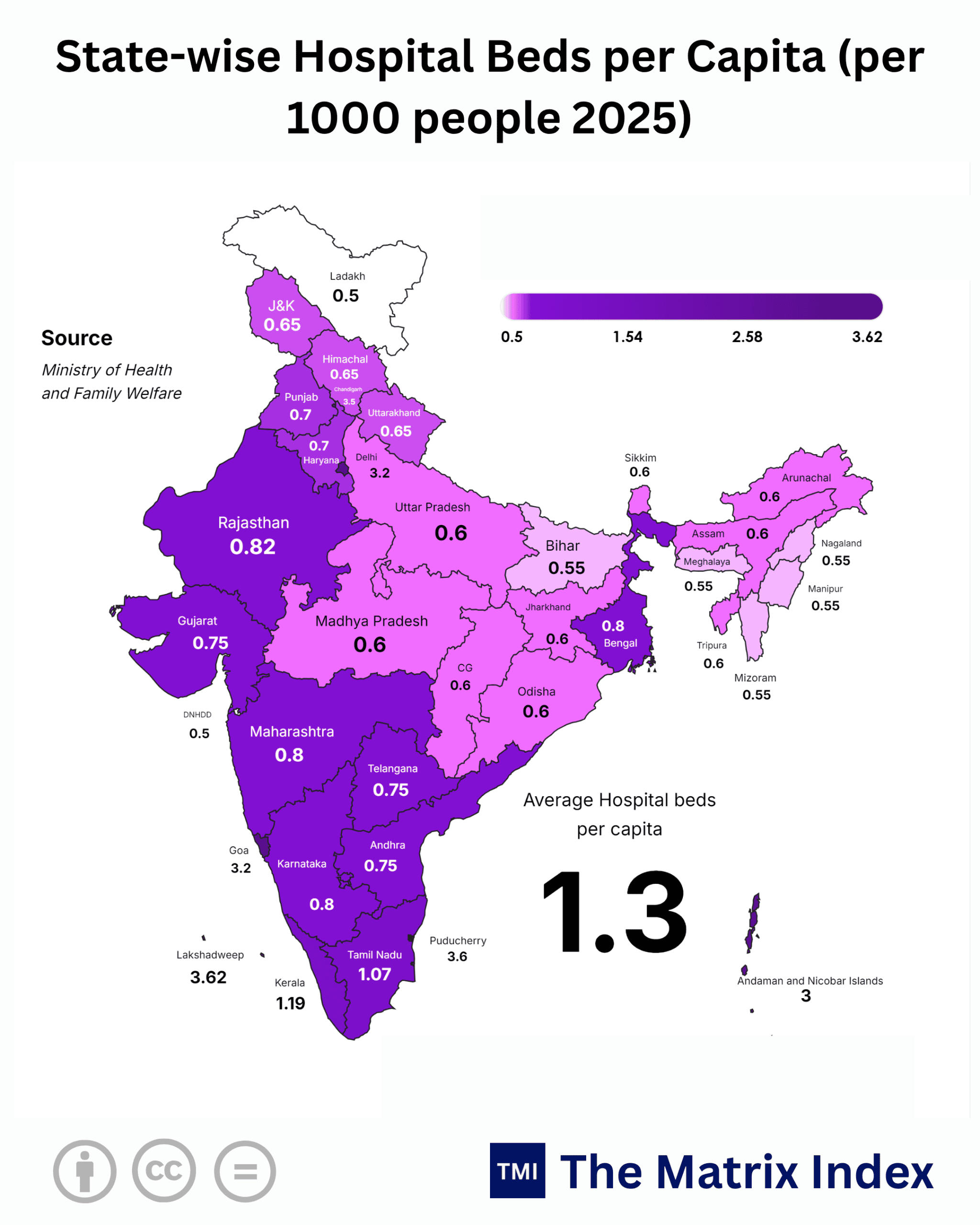
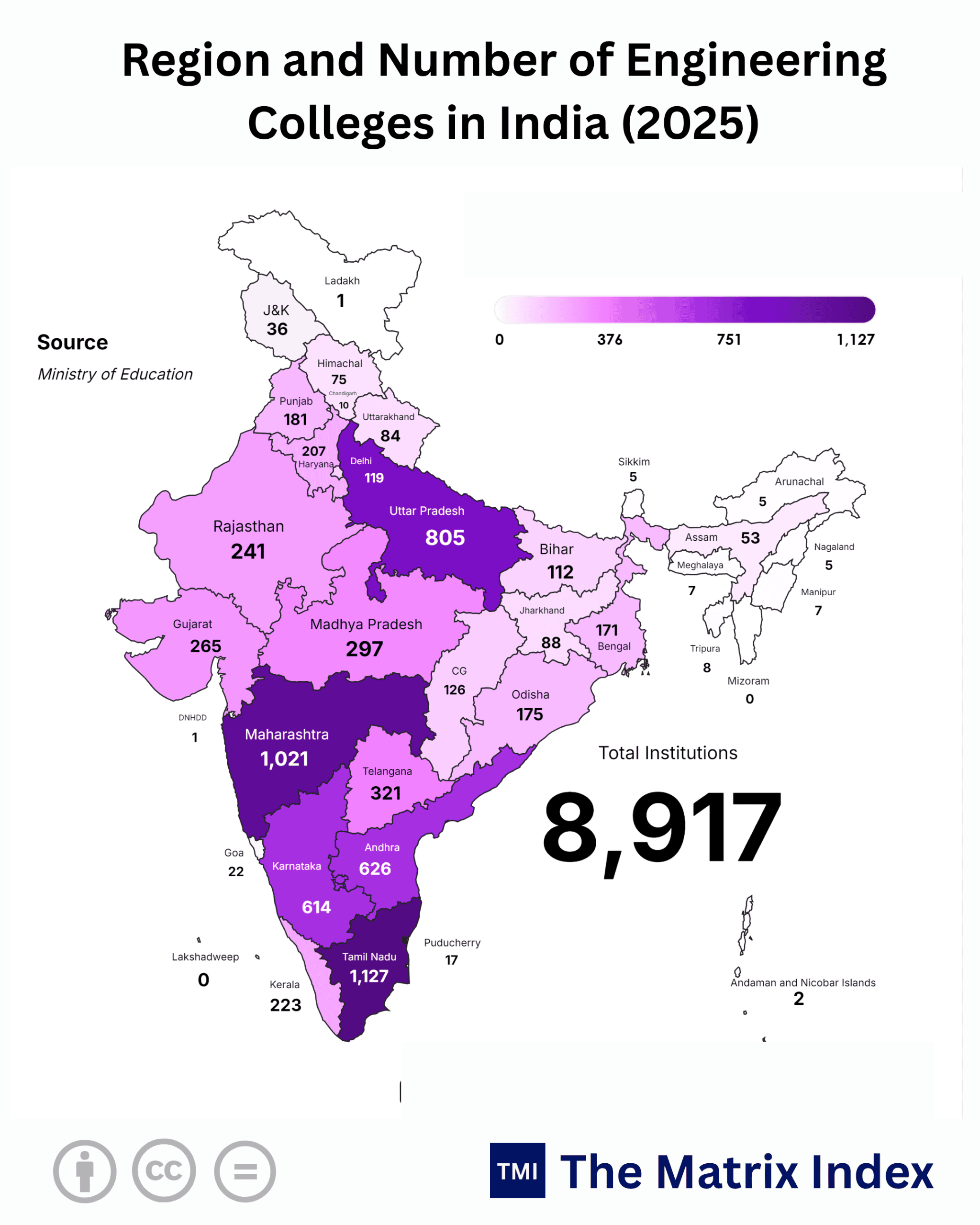
The baseline ledger reveals a staggering geopolitical and economic fracture: five southern and western states command nearly half of India’s entire medical training pipeline, while a population basin exceeding 450 million people across northern and eastern India survives on structural breadcrumbs.
This is not accidental bureaucratic friction. It is a calculated, multi-decade capital distortion where clinical education has abandoned public health mandates to chase private equity yields, localized political patronage, and real estate speculation.
The Geographic Monopoly: Dissecting the 779-Institution Ledger
The numbers do not whisper; they scream structural bias. Four states Maharashtra (94), Tamil Nadu (91), Uttar Pradesh (88), and Karnataka (86) command 359 institutions, or 46.08% of the nation’s entire training capacity. Add Telangana (65) and Gujarat (41), and six states swallow over 60% of India’s medical infrastructure. Now look at the opposite end of the ledger. Bihar, populated by more than 130 million citizens, manages a pathetic 22 medical colleges. That is one institution for every 5.9 million people.
Contrast that with Karnataka (86 institutions for ~68 million people) or Tamil Nadu (91 institutions for ~77 million people), where an institution exists for roughly every 800,000 to 850,000 residents.
The southern corridor has achieved physical seat penetration parity with nations like Germany and Australia. Meanwhile, the central-eastern belt remains trapped in sub-Saharan structural deficits.
The Complete National Baseline Ledger
(The Bitter Truth): Over 57% of India’s medical training institutions are anchored in states representing less than 35% of the nation’s total population. The northern demographic engine is producing hundreds of millions of citizens who will be treated by a medical workforce that structurally refuses to practice outside wealthy southern and western economic centers.
The Global Anatomy of Spatial Malpractice: Cross-Border Structural Benchmarks
India is not the first nation to fall into the trap of geographic concentration, but its scale makes the error uniquely dangerous. Let us benchmark this against mature and emerging international models.
The United States: The Post-Flexner Debt Machine
The United States operates roughly 190 accredited MD and DO institutions for a population of 340 million. The US avoided gross geographic desertification by dispersing public land-grant universities. But it pioneered a more insidious evil: the $250,000 to $400,000 student debt trap.
This mountain of debt forces graduating clinicians away from primary rural care and straight into hyper-specialized, high-margin urban hospital systems. India has imported the absolute worst elements of this model. The Indian private deemed university ecosystem now charges ₹80 Lakh to ₹1.5 Crore ($95,000 to $180,000 USD) for an undergraduate MBBS seat.
This creates a structural dynamic where a graduating 24-year-old cannot afford to work in rural Bihar or tribal Odisha without facing mathematical bankruptcy.
Germany: Rigid Federal Parity
Germany runs 43 public medical faculties for a population of 84 million. Private institutions represent a negligible, heavily policed fraction of the system.
The state dictates capacity based on demographic replacement projections, funding university clinics via federal allocations (Länder budgets). No German state experiences an eight-fold deficit in doctor production relative to its neighbor. India’s wild, uncoordinated state-by-state expansion stands as the absolute antithesis of this planned stability.
Japan: The Prefectural Quota (Jichi Medical Model)
Facing severe rural shortages across its aging archipelagos, Japan did not leave seat allocations to the whims of the open market.
Through institutions like Jichi Medical University and strict prefectural quotas (Chiikiwaku), Japanese medical students receive full state tuition waivers. In exchange, they sign binding covenants requiring nine years of mandatory public service in their home prefectures.
India’s attempt at bond enforcement, by contrast, is a joke. It is crippled by endless litigation, widespread political bribery, and trivial financial buyouts that wealthy students clear without a second thought.
China: The State-Directed Industrial Complex
China restructured its clinical education by anchoring medical schools directly inside massive comprehensive universities, backed by state-funded Tier-3 hospital systems. The state dictates internal migration. If western provinces require clinical capacity, medical institutes in Sichuan or Xinjiang receive direct capital pipelines from Beijing.
India’s political economy cannot replicate this top-down command structure. The result is pure market chaos: capital flows where land values and disposable incomes are already high namely Pune, Bengaluru, Chennai, and Hyderabad.
Brazil: The Unregulated Private Boom Warning
Brazil serves as India’s closest and most alarming structural mirror. Over the last fifteen years, Brazil deregulated private medical schools. For-profit education giants rapidly flooded the market with low-tier campuses. The result? A massive surplus of under-trained, debt-burdened doctors huddled in São Paulo and Rio de Janeiro, while the Amazonian north remained a clinical wasteland.
India’s current run toward 779 institutions mirrors Brazil’s trajectory with terrifying precision.
The Financial Engineering of a Medical Seat: Real Estate, Black Capital, and Private Equity
Why are there 94 colleges in Maharashtra and 86 in Karnataka, but only 9 in Jharkhand?
The answer has nothing to do with epidemiological need, disease burdens, or infant mortality rates. It is an artifact of high finance, real estate speculation, and political money laundering. To build a private medical college in India requires a minimum initial capital outlay of ₹300 Crore to ₹500 Crore ($36M to $60M USD), alongside a contiguous land parcel of 10 to 25 acres (subject to regulatory relaxations).
In states like Karnataka, Maharashtra, and Tamil Nadu, post-1980s economic policy allowed regional political barons, sugar cooperatives, and liquor syndicates to park cash reserves inside tax-exempt educational trusts.
The “Ghost Patient” and “Rent-a-Faculty” Shell Game
The regulatory bodies mandate that an institution must maintain minimum bed occupancy rates (typically 60% to 80%) and a fixed ratio of professors, associate professors, and senior residents to secure annual seat renewals.
In dozens of private institutions across Tier-2 and Tier-3 corridors, this requirement has fueled a sprawling industry of outright fraud:
-
Rent-A-Faculty Networks: Private practitioners in major metros are paid retainers of ₹50,000 to ₹1.5 Lakh per month simply to keep their medical licenses registered with a rural private college. They appear on campus for exactly two days a year: the afternoon before an inspection, and the day the inspection team arrives.
-
The Ghost Patient Economy: Local transport companies are hired during inspection weeks to bus in healthy slum-dwellers or agricultural laborers. These individuals are placed in clean hospital gowns, tucked into empty wards, and given fabricated clinical charts to fake an active inpatient load.
-
Diagnostic Shadow-Billing: Imaging equipment (CT, MRI) and laboratory analyzers run dummy calibration cycles to generate fake diagnostic trails, creating the paper illusion of a bustling hospital ecosystem.
This entire pantomime is funded by one engine: the unregulated extraction of student fees. When an institution charges ₹1 Crore for an MBBS seat and runs a batch of 150 to 250 students, it nets an upfront gross operating haul of ₹150 Crore to ₹250 Crore per batch.
This is not education. It is an unregulated, high-yield shadow banking operation running under the legal protection of educational trust status.
The “So What?” Factor: The Crushing Ripple Effect on Ordinary Citizens
What does this geographic and financial distortion mean for a family living in Darbhanga (Bihar), Bastar (Chhattisgarh), or Palamu (Jharkhand)?
1. The Catastrophic Health Expenditure (CHE) Trap
When an entire state like Bihar (22 colleges) or Jharkhand (9 colleges) lacks advanced tertiary teaching institutions, the local population is systematically stripped of complex surgical care, specialized oncology, pediatric intensive care, and interventional cardiology.
The direct consequence is the Forced Medical Migration Vector. A marginal farming family in eastern India facing a complicated oncological diagnosis or neurosurgical crisis must travel over 1,000 kilometers to AIIMS New Delhi, KEM Hospital Mumbai, or private healthcare networks in Chennai.
-
The Travel and Logistical Tax: The family spends between ₹30,000 and ₹1 Lakh simply on train fares, unregulated ambulance transfers, and predatory temporary lodging outside metropolitan hospitals.
-
Asset Liquidation: Over 63% of out-of-pocket healthcare expenses in India are financed directly through the catastrophic sale of productive agricultural land, liquid gold, or loans taken from non-banking moneylenders at interest rates between 36% and 60% annually.
-
The “Quack” Dependency Loop: Because legitimate MBBS-trained clinicians refuse to set up practices in districts devoid of secondary and tertiary referral infrastructure, over 70% of primary clinical encounters in rural northern India are handled by unqualified informal healthcare providers.
2. The Clinical Dilution of the Urban-Trained Doctor
A student who graduates from a hollowed-out private institution where the hospital had no real patients, no trauma cases, and no complex obstetrics enters the workforce with virtually zero bedside diagnostic competence.
When these graduates enter the market, they gravitate entirely toward private metropolitan hospital networks. To survive professionally and clear their debts, they become cogs in corporate hospital business models:
The citizen in Mumbai, Bengaluru, or Delhi might have access to a doctor, but they are subject to an aggressive clinical extraction model designed to pay down the doctor’s historical educational capital debt.
Seasonality & Anomaly Alert: The 2017–2026 Capex Illusion
Over the past decade, headlines have celebrated the rapid expansion of medical education: “A New Medical College in Every District!” Look closer at the ledger. This expansion is an engineered, debt-fueled anomaly, not a sustainable structural baseline.
The Uttar Pradesh Anomaly (88 Institutions)
Uttar Pradesh’s climb to 88 institutions looks like an administrative miracle on paper, placing the state close behind Maharashtra (94) and Tamil Nadu (91).
The ground reality tells a vastly different story. A significant percentage of these newly minted institutions are district-level hospital conversions.
Administrators simply mounted a new sign board (“Government Medical College”) over a decaying 200-bed secondary civil hospital, built a rushed academic block, and opened student admissions.
-
The Faculty Deficit: These newly launched institutions suffer from continuous senior faculty vacancy rates running between 35% and 55%. Professors from premier institutions refuse postings in remote rural districts lacking basic schooling, residential infrastructure, and professional peer networks.
-
The Clinical Volume Mirage: While outpatient departments are flooded with common seasonal ailments, the hospitals lack the critical infrastructure blood banks, operational ICUs, histopathology labs, and advanced surgical equipment required to deliver real medical training.
-
The Accreditation Relaxation Anomaly: This expansion was enabled by regulatory maneuvers that systematically reduced compliance standards: slashing minimum land requirements, allowing digital monitoring systems that are easily manipulated, and diluting bed-to-student ratios.
This is a structural policy bubble. By 2028-2030, thousands of students will graduate from these hollowed-out district conversion colleges. They will hold valid medical degrees, but will lack the practical clinical training needed to safely perform routine emergency procedures.
Two-Sided Risk Assessment: The Bull vs. Bear Case for India’s 779-Base Medical Economy
To evaluate how this infrastructure will perform heading into the 2030s, we must weigh both the aggressive optimistic projections and the cold, institutional counter-realities.
The Bull Case: The Global Demographic Savior Engine
-
The Global Replacement Pipeline: The developed world is aging at an unprecedented pace. The US, UK, Germany, and Japan face catastrophic demographic deficits in their clinical workforces over the next two decades. India’s 779-institution engine could establish an unassailable global monopoly on the export of medical and clinical talent, generating tens of billions of dollars in stable foreign exchange remittances.
-
Domestic Saturation-Driven Spread: As major metropolitan hubs (Delhi, Mumbai, Bengaluru) hit peak doctor-to-population density, private market returns in Tier-1 cities will drop. This saturation could finally force younger clinicians into Tier-2 and Tier-3 urban markets, organically expanding medical access to regional centers like Gorakhpur, Hubballi, and Asansol.
-
Clinical Scalability & MedTech Testing: The staggering volume of clinical pathology across these 779 hospital ecosystems forms an unmatched testing ground for next-generation, low-cost diagnostic hardware, artificial intelligence triage models, and telemedicine delivery platforms.
The Bear Case: Structural Devaluation and Systemic Collapse
-
The National Exit Test (NExT) Crisis: When a standardized, zero-compromise national licensing examination is fully deployed, passing rates at sub-standard private and under-resourced district state colleges could plummet below 25%. This will leave tens of thousands of deeply indebted graduates legally barred from clinical practice, sparking widespread student protests and legal challenges.
-
Metropolitan Super-Saturation vs. Rural Desertification: Wealthier clinicians will accept underemployment, low-tier corporate hospital salaries, and non-clinical desk jobs in Tier-1 cities rather than move to underfunded facilities in rural Bihar, Madhya Pradesh, or Odisha.
-
The Brain Drain of Elite Talent: India’s top medical graduates will continue to leave the country in droves, driven away by deteriorating working conditions, low pay in the public sector, and politically motivated administrative mandates. This flight leaves under-trained, debt-saddled graduates to manage an increasingly complex, underfunded domestic healthcare system.
The Alternative Scenario: The Hyperscale Crash Counter-Narrative
What happens if the underlying assumptions supporting this 779-institution complex suddenly disintegrate? Consider a high-probability macroeconomic shock between 2027 and 2032:
If the National Medical Commission (NMC) moves from paper compliance to unannounced biometric audits, live satellite-linked hospital occupancy tracking, and blind-audited surgical logs, over 150 private institutions in Maharashtra, Karnataka, Tamil Nadu, and Telangana would fail their accreditation standards overnight.
The Macroeconomic Domino Effect
-
The Private Equity & Real Estate Retreat: The stream of private capital chasing institutional education will freeze. Non-Performing Assets (NPAs) across regional cooperative and private lenders heavily exposed to private medical infrastructure will surge.
-
The “Stranded Student” Crisis: Tens of thousands of medical students enrolled in unaccredited, financially underwater private institutions will demand immediate absorption into over-leveraged state government colleges, sparking deep political instability.
-
The State Takeover Trap: State governments, facing immense public and political pressure, will be forced to nationalize and subsidize these failing, debt-ridden private campuses, draining state budgets and crippling other public works.
Strategic Regional Breakdowns: The Four Indias
To understand the 779-institution baseline, we must abandon the fiction of a unified national healthcare landscape. Instead, India operates as four distinct, non-communicating public health republics.
1. The Southern Saturation Bloc (TN, KA, TG, AP, KL: 316 Colleges)
With 316 institutions (40.56% of the national total) serving roughly 250 million people, this region has achieved deep physical infrastructure coverage.
-
Tamil Nadu (91) has built an exceptional, low-cost district-level public medical infrastructure, establishing the gold standard for state-subsidized clinical access.
-
Karnataka (86) remains dominated by private educational empires that rely heavily on out-of-state students from northern India to pay substantial management quotas.
-
Kerala (36) has moved past primary bed constraints, pivoting toward advanced geriatric care, long-term chronic disease management, and public health surveillance that mirrors European health outcomes.
2. The Western Private-Capital Axis (MH, GJ, RJ: 167 Colleges)
-
Maharashtra (94) stands as the national capital of high-cost private education trusts, creating a system characterized by stark dualities: ultra-advanced corporate quaternary care in Mumbai-Pune, alongside severely under-resourced public facilities in Marathwada and Vidarbha.
-
Gujarat (41) has pioneered the aggressive corporatization of public medical education via the Gujarat Medical Education & Research Society (GMERS) model, shifting the fiscal burden of medical education directly onto students through high self-financed fee structures.
3. The Northern Demographic Basin (UP, BR, MP, JH, CG: 166 Colleges)
This region is the world’s most critical public health pressure cooker: 550+ million citizens served by only 166 institutions.
-
Uttar Pradesh (88) is pushing hard to catch up through rapid state-funded construction, but continues to struggle with chronic faculty shortages and low bedside diagnostic capacity.
-
Bihar (22) and Jharkhand (9) are trapped in severe institutional paralysis, spending decades without building the basic academic pipelines needed to produce local, specialized medical talent.
-
This dynamic drives an unsustainable cycle: patients travel thousands of miles to access tertiary care in the south and west, while money flows out of poorer states and into metropolitan private healthcare systems.
4. The Northeast and Himalayan Frontier (Assam, NE States, J&K, UTs: 41 Colleges)
This fragile mountain and cross-border perimeter has long been neglected by private capital:
-
12 States and Union Territories survive on one or zero medical colleges.
-
Nagaland (1), Arunachal Pradesh (1), and Mizoram (0*) reflect decades of under-investment, where complex trauma, oncology, and cardiac cases require long-distance emergency airlifts or arduous cross-state transfers to Guwahati or Kolkata.
Comprehensive Structural Comparison: Tier-1 Hubs vs. Forgotten Hinterlands
The table below breaks down the wide variations in infrastructure, capital, and clinical access across India’s distinct medical education landscapes.
The Capitalist Shakedown: The Road to 2030 and Vision 2047
As India approaches the 2030s and works toward its Vision 2047 development milestones, the medical education cartel will face an unavoidable day of reckoning.
The current policy path simply adding more real-estate-heavy institutions without fixing faculty distribution, training quality, or geographical imbalances will run into three hard structural limits:
Phase 1 (2026–2030): The Quality Wall and the Capitation Implosion
Standardized national licensing, paired with transparent digital auditing of hospital clinical data, will challenge the business models of low-tier, high-cost private institutions.
Families will no longer pay ₹1.5 Crore for an unaccredited MBBS degree if the graduate cannot pass national licensing exams. Dozens of poorly managed private colleges will face severe financial strain, sparking a major consolidation wave led by corporate healthcare chains, private equity funds, and premier hospital networks.
Phase 2 (2030–2038): Deepening Geographic Divergence
Without a massive, targeted federal program to build high-end teaching hospitals across northern and eastern India, the medical divide between regions will widen:
-
The South and West will evolve into high-tech, export-driven clinical education hubs, training doctors, nurses, and technicians for aging healthcare systems across the OECD, Gulf States, and East Asia.
-
The Central and Northern Belts will grapple with high disease burdens, relying increasingly on short-course mid-level health providers, telemedicine hubs, and traveling surgical missions to plug basic clinical gaps.
Phase 3 (2038–2047): The Decentralization of Medical Training
By 2047, the traditional model of building massive, expensive 50-acre medical colleges will be largely obsolete. India’s path to universal healthcare access will rely on decentralized, technology-enabled training models: By linking standardized, interactive digital learning with hands-on clinical training across hundreds of upgraded district civil hospitals, India can bypass the predatory real estate cartel.
This transformation will convert thousands of local secondary hospitals into practical, high-yield clinical training centers finally bringing quality medical education to the communities that need it most.
My Verdict: The 2026–2030 Strategic Roadmap and Clear Call to Action
The ledger of 779 medical institutions is not a sign of balanced healthcare success; it is a clear diagnostic map of deep regional and economic inequality.
If this structural imbalance is left unaddressed, building more low-quality, high-cost campuses will simply enrich real estate developers while stranding millions of citizens in expansive medical deserts. The future of Indian healthcare cannot be built on real estate shell games and hollow statistics.
We must decide whether this 779-institution network will remain an exclusionary, high-yield financial cartel or transform into a balanced, accessible, and accountable public health system that serves every citizen across the nation.
Google ‘People Also Ask’ FAQs
1Q: Which Indian states have the highest concentration of medical colleges?
A: 46.08% of India’s 779 medical colleges are concentrated in just four states: Maharashtra (94), Tamil Nadu (91), Uttar Pradesh (88), and Karnataka (86). This geographic cluster leaves 12 frontier states and union territories with one or zero operational training institutions.
2Q: What is the average cost of an MBBS seat in India’s private medical colleges?
A: ₹80 Lakh to ₹1.5 Crore ($95,000 to $180,000 USD) is the standard private management seat acquisition cost. These high upfront capital burdens force graduating clinicians into saturated urban private hospital chains to rapidly service personal educational debt.
3Q: How severe is the doctor-to-population disparity between northern and southern India?
A: 1 institution serves roughly 850,000 residents in Karnataka and Tamil Nadu, compared to 1 per 5.9 million citizens in Bihar. Over 57% of colleges sit in southern and western states representing under 35% of the total population.
4Q: What risks threaten private medical colleges before 2030?
A: 2026 to 2030 forecasts project mass accreditation failures as standardized national exit licensing exposes sub-standard clinical training. Campuses relying on ghost faculty and fabricated patient rolls face sudden license cancellations and institutional insolvencies.
5Q: How many medical colleges and universities exist in India?
A: 779 medical colleges and universities form the national baseline, but over 60% are clustered in just six states. Meanwhile, critical demographic basins across central and eastern India face severe secondary and tertiary healthcare deficits heading toward 2047.
Data Source:
- National Medical Commission (NMC)
- Ministry of Health and Family Welfare (MoHFW)
- World Health Organization (WHO)
- OECD Health Statistics.
Disclaimer: This report is for informational and analytical purposes only and does not constitute formal financial, investment, or policy advice.